
Explore the latest trends and find our updates on all you need to know about what is happening in the world of web and technology.

 2667
2667
While security personnel is becoming constantly being used to plan for enforcement reviews and handle security incidents, B2B businesses is a business that has started inquiries for the outsourcing of managed security services.
A recent report by analyst firm IDC found that Canadian companies will become more focused on SaaS third-party and controlled security services. According to IDC, 61 percent of security professionals also note that the main reason for outsourcing is to ensure 24-hour staffing, while 39 percent say that security is not the core of their business.
To CISOs, the most important shift is that they are now working on the presumption of being hacked. As a result, we see them increasingly turning to advanced behavioral analysis tools that detect unidentified anomalous events, such as servers interacting with each other that have never previously interacted or data exchanges with external sites that have never before existed.
Cyber threats know no boundaries Regardless of nationality, CISOs are all facing new groups of digital and cyber threats from professional hacker teams and illegal marketers. Cybercrime, experts say that this has become an organized crime.
The threat environment is evolving so fast that it is almost impossible for security teams to keep up. "This is where the offerings of managed security services are essential. Managed security service providers can invest in acquiring the necessary expertise, technology, relationships, and business methodology to meet their customers ' security requirements.
Managed security service providers can invest in gaining the necessary expertise, technology, relationships, and business methodology to meet their customers ' security requirements.
A strong partnership with a managed security service provider adds to the existing security team of a company trained, experienced cyber-threat specialists.
With more standards and protocols than virtually any other industry, selecting the most appropriate framework remains one of the most important security decisions a B2B professional can make. This has to go hand in hand with a B2B company's compliance regimes in its specific vertical.
Choose the security framework- ISO, NIST CSF, PCI DSS- best suited for your organization based on industry, regulatory requirements and contractual agreements. Base your existing controls against the selected framework and develop an improvement plan. Define the testing process for each check
Other experts say B2B professionals need to understand safety standards first. According to Dan Hoban, Business Development Director, Nuspire Networks, an MSSP specializing in network security management, this often means that standards must exist at a level that everyone in the organization can understand.
The most successful standards programs start by writing a report for everyone to understand, not just the IT department. In order to ensure that everyone follows safety standards, creates compliance procedures and training ensure that it becomes a routine, not just a text. It is also important for everyone in the company to adapt to security processes- authentication policies, methods of information sharing, etc.
In addition, a B2B security practitioner must keep documentary evidence and work plans in a centralized location to be referenced as needed.
Choose the right personnel and equipment. Cyber threats continue to spread and expand in the B2B domain. With the advent of new technology such as SDN and drones, it remains a challenge to find the right staff and appropriate resources for minimizing protection.
There is a severe shortage of qualified security staff who are able to understand what resources to use, how to integrate them into a security program, and how companies are looking for the kind of security outcomes.

B2B companies may find it impractical to do their own security in this situation. And they may perceive that the process can be simplified by a single security vendor. Then you need to create a hierarchy of protection.
Prioritize vendors who can contribute several technology pillars; vendors who allow your defense orchestration should be at the top of your list.
The very main reason for managed security service providers (MSSPs) is these kinds of problems. To conduct business, B2B companies went into business- not to provide proof of remedies for computer breaches. According to experts, they need an optional solution when dealing with security issues.
Another the undeniable benefit to companies is the versatility that comes with MSSPs, "says Simon Talbot, analyst, Proactive Risk Management, a company responsible for risk management and security solutions." It is no longer necessary to employ, hire, train or manage resources internally for MSSPs to take care of the functions of security and crisis management. This versatility also means service level and effectiveness are highly achieved.
B2B companies can outsource managed security services as well as the CISO itself. At least that's a solution provider's premise. The problem with many companies is that they have no need or ability to pay for a full-time security professional, so they allow their network administrators or developers to do part-time security.
This becomes problematic because security is niche expertise, and it's not really something that you can pick up from the side, and companies are finding that the hard way. "Hence, the new approach to outsourcing CISO services as needed.
With every newly advertised network hack, it seems to go in spurts. According to MacDougall, this is when B2B management teams realize that there is no one on board to secure their customer data and need to virtualize the role. This allows even the smallest B2B start-up to have protection for a fraction of the costs on the scale of the Fortune 500 company.

 2142
2142
Like it or not, 2020 is just around the corner, bringing a lot of new technologies, trends, and approaches to the world of software development. Because of the speed at which some of them are rising right now, it is highly likely that some of these trends will explode and become standards in 2020.
Over In the past years, the world of data management has undergone unprecedented change and is about to see another revolution in mobile communications. Internet of Things (IoT) and system intelligence is expected to accelerate and kick in high gear over the next 10 years.
All this means developers are under the gun to keep their skills important in a world where the PC, or even the cell phone, is no longer the center of the virtual universe. While keeping up with the latest programming languages and techniques is always wise, coders should also keep up with the many new tools that help make their creations relevant to new generations of users. The following are some of the five programming tools for 2020 and beyond.
NLP makes it easier for non-technical users to navigate their way through complex processes from chatbots to personal digital assistants. We can expect software and services incorporating NLP to break away from traditional non-verbal offers in a number of key areas in both the consumer and professional spheres.
For example, a voice-driven user interface removes the clicking, pressing and sliding that currently powers most applications and services, making it much easier to search menus and access data that would otherwise be inaccessible to all but the most advanced users.
Toolkits such as Python's NLTK enable programmers to quickly integrate NLP into digital products, but programmers are now responsible for advancing their skills before the full rush to the verbal UI begins. By the middle of the decade or earlier, expect NLP to become omnipresent in everything from business and consumer technology, autonomous vehicles, retail and restaurant kiosks and apps all over the home.
Passwords are becoming increasingly ineffective in protecting confidential information as unsettling as it might sound. They are not only vulnerable to sophisticated hacking tools. Some of which are now enhanced by artificial intelligence and even quantum computing- but they are burdensome for the user and result in unnecessary complexity in the data environment and even in the application itself.
But as software engineers have recently noted on Level Up, a plethora of new types of authentication, such as biometrics, facial recognition, and voice processing, are already on the market. Users are already used to accessing their smartphones with a thumbprint or just a fast facial scan, so it won't be long before they get angry about digiting just to get into it.
So it won't be long before they get upset about digiting just to get into key financial or productivity apps. Moreover, code will need additional verification technologies as well as deployment and integration through third-party products to make the successful use of these new automation tools.
GraphQL pulls all relevant data from multiple sites with a single request. It only peaks relevant data, no overtaking. This reduces latency and makes the app or service much more responsive to the user, especially as data requests will skyrocket due to the expected increase in autonomous services in the coming years.
GraphQL also requires less coding than REST, enabling complex queries with a few simple lines, and a number of Backend as a Service offers have already been supplied that make it easier to implement across a wide range of programming languages.
Although most applicable to the development of mobile apps, 5 G connectivity will have an impact on traditional software, web development, embedded systems and almost everything else. After all, everything is linked in the IoT, and software that does not exploit high-speed wireless resources to its full potential is likely to fall into obsolescence.
In a recent interview with Digital Trends, 5 G will deliver lower latency, higher bandwidth, faster data sharing, and speeds up to 10 times faster than existing wireless technology," not only improving the performance of existing services, but also creating a completely new digital ecosystem with a unique collection of new services that can not be delivered.
This light will require programmers not only to incorporate the right APIs to take advantage of 5 G, but also to devise creative new ways of changing their programming styles in order to deliver compelling use cases that will distinguish their products from the crowd.
All code should be as effective as possible, but the fact remains that many programs are entirely written from scratch, which means that programmers often create functions that already exist elsewhere. By providing preconfigured code that can be embedded in larger programs, the low / no-code movement seeks to correct this overlap.

This enables even non-programmers to quickly and easily create complex products under a building block paradigm, cutting costs and bringing development to the speed of the modern digital ecosystem.
Existing no / low-code functions are already being implemented in back-office systems, web portals, mobile applications, and other regions with ready-made tools managing everything from sorting and searching to import, export, and workflow logic.
Going forward, life appears to be less complicated for today's programmer, even as it becomes more challenging. The pace of development is likely to accelerate, but easier to use because of numerous available tools to do the job. Ultimately, this should result in the world heading into a new digital age being a vibrant and more rewarding industry.
Given the speed with which today's technologies and trends are rising, it's only natural that 2020 will be more than just these five trends. These will certainly be the stars for next year, however, as they are not only promising technologies but tools that already find their place in the modern world.
Most of them are among us, but there is still space for them to rise. What brings them all together is that they are going to define the software development future for 2020 and beyond. This is because teams in the production of technology will need to learn how to handle these innovations and follow their rise to industry standards.
2225
The world of dating apps at first glance sounds as bland and trite. Dating apps have been in use now for a decade and their popularity stays moderate and not too high in terms of their uniqueness and pleasing addition. That is because the dating apps that exist in the present scenario are more or less the same. Individuals always get a very minimalistic difference in Dating Website Design.
It induces curiosity in consumers ' minds to seek some more sophisticated applications where good dating requirements can be obtained. In dating apps, a fine user interface matters a lot. Therefore, Online Dating Portal Creation comes into play and we can compile a list of features and basics that would certainly be lacking for potential dating apps.
Bumble, Twitter, Tinder, Instagram, Grindr are currently the most popular dating apps. Nevertheless, speaking about the development of social media apps, we will dive deep into the options that we are likely to find in potential dating applications in this post. Let's begin with:
Providing a smarter and safer user interface is important for the new dating website design. People are often away from online dating apps because they want to avoid the risk of getting caught in certain fake accounts and interactions.

Only the amount of information the account chooses to submit to us can be seen. There is always a great possibility in such cases that the crimes, catfishes, misuse the data that we share with them.
Online Dating Portal Development can provide options to secure such individuals from a country's discriminatory laws. With the notification of the user, they can stop the use of the app in that country where their gender identity is not acceptable.
The virtual dating space that was created in today's time through the dating apps has resulted in the risk of being rejected and meeting someone, in reality, being avoided. Many teenagers showed a tendency towards real-life interactions other than mere connectivity online.
With this in mind, dating apps need to consider how to protect their users- especially when we know that some have been used to trap gay people in places such as Russia and Egypt.
If you're looking forward to a smart dating app, you can look for a social networking app development company that will also boost people's real-life communication. It offers greater transparency and accessibility as it has been a boring dating practice in recent years. Some people may not find it necessary in the future, but it is recommended by many.
In the dating apps, machine learning technology can be used to enable your device to detect and analyze your likes and dislikes better. Based on artificial intelligence and machine learning, the development of social media apps can make better predictions. Finding the right dating match from your behavioral analysis will get information about your personality.

The amount of time you take to answer a message or chat, the number of hours you're spending on the app, the chats you are looking at most, and many other factors. There are currently different apps in the UK that have come up with such ideas by adding matching learning techniques to their online dating app.
There will be more space for fluidity in a relationship in the future in much the same way we see fluidity in sex at the moment, In other words, the notion that different relationships have different benefits is better understood by us, more so than the one relationship we are told will be self-fulfilling and improve our sense of self.
Online Dating Portal Design will create better choices for their app design so that people who are searching for a real dating experience instead of just passing the time. Potential dating apps need not be gender- or sex-specific, but rather inclusive and enriched in nature.
Over recent years, gender and sexual fluidity have changed and progressed, and with that being said, one can look forward to developing a more inclusive dating app.
There are many applications for social media where people instantly like or dislike a person without learning much about them, and this has also brought many repercussions. Depending on the number of followers they have, many people show their interest in others.
By looking through their profile images in apps like Tinder, they simply swipe through the profile of a person. On certain dating apps, racism, fatphobia, and misogyny are on a hike.

In the current online dating process, a sense of style arises that needs to be replaced with a more mature view. The dating website model you have selected for your request must give up such a shallow approach and practice.
People are often disappointed by recurring failures in relationships that have been started by online dating apps. They also begin to find the app's boring and exhausting features. Yet things can work much better with AI-built software. All you need to do is allow your dating application to dig into some of your private details to help you better understand your preferences.
We can't imagine a complete offline dating surface for you in the age of digitalization that has already really evolved. Indeed, in the future, every Social Networking App Development Company would attempt to adopt such an intelligent user interface that plays a beneficial role in your business. The social media app is likely to feature a dating design consisting of the features we have mentioned.
 2333
2333
In this modern world of digital renaissance and Internet of Things (IoT) and similar technologies such as Social, Mobile, Analytics, and Cloud (SMAC), Big Data, and Cloud Computing, etc., B2B marketers are exposed to heavy data volumes and are therefore obliged to use encryption to protect data.
Cybersecurity is becoming a top priority for international marketers. It is a mixture of technology, procedures, and policies designed to protect consumers ' networks, devices, systems and sensitive personal data such as their names, addresses, phone numbers, images, and email addresses.
Millions of users around the world are generating huge amounts of data and are more careful than ever about their data security. In addition, international data security regulations such as GDPR and CCPA require marketers to use cybersecurity for data protection or impose heavy fines for breach of regulations. The following are tips on how B2B brands can employ Cybersecurity for data protection.
B2B marketers need to understand cybersecurity threats in order to take advantage of cybersecurity for data protection. We live in an era in which a wide range of digital pieces of equipment, gadgets, and devices surround us. These days, no single B2B company is deprived of computerized or automated control systems.
Marketers, therefore, need to prepare themselves to exploit technology for data protection, which involves providing training for workers to instill cybersecurity culture in them and enabling them to keep up with the latest cybersecurity standards around the globe.
B2B companies need to invest in efficient business intelligence systems that need to be shared at potential cyber threats across multiple departments. It helps to have an extended network with connected devices. Actionable intelligence coupled with brand-exclusive security solutions helps to make data protection the best out of cybersecurity.
B2B workers must build risk intelligence so that they can efficiently manage data protection cybersecurity. In addition, risk information can be quantitative, qualitative or automated.
An ideal tactical threat system can handle all kinds of external threats effectively to leverage data protection cybersecurity. This includes firewalls hazard, malware protection, web gateways, email security and prevention of intrusion. Having an impactful business intelligence infrastructure and proper analytical ability to identify threats on time can help organize the B2B cybersecurity protection.
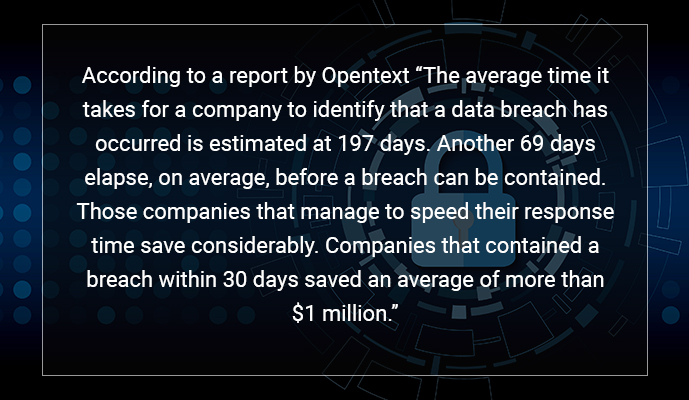
communication from a computer by leveraging cybersecurity for data protection to facilitate faster collaboration and business decision making. Organizations must reduce time in the event of potential data breaches to identify the same and remediation time without being apprehensive.
This risk analysis technique works to exploit cybersecurity for data protection by focusing on small and industry-specific cyber threats. Although correlating data to improve data cybersecurity accuracy can provide accurate information to enhance protection, it is also useful for organizations to understand the importance of data structuring across a range of security techniques
Cybersecurity, also known as cybersecurity and protection of information technology, refers to computer systems being secured from malicious threats of harm or data breach. The security covers the protection of equipment, software, electronic data and protection from unauthorized access to data centers and other computerized systems.
It requires procedural methods by using code, hardware, and procedural methods to protect applications from malicious external hazards. Because modern applications are accessible across a variety of networks, it is important for marketers to deploy cybersecurity to protect applications, particularly software applications.
Software applications are vulnerable to a wide range of threats, including unauthorized access, access manipulation, modification, stealing, or even deleting sensitive user data.
It includes activities to protect internet users in an era of Internet Security. This cybersecurity element is linked to the protection of network data usability, integrity, and security.
This cybersecurity element resonates with risk assessment and management. Having a built-in cybersecurity system that helps B2B marketers secure their data for foolproof application security and risk management enables the business to secure their data securely. For example, cryptography tools protect messages during transmissions and digital signatures by asking individuals to validate their identity.
This cybersecurity component focuses on the IT safety management sensitization of employees. This also involves workers 'skill-development to deal with potential risks. General education on data security should also be given to workers after a while in order to get to know them about IT policies, global data protection regulations such as GDPR and equipment management.
The first step is to develop security policies and define them correctly in order to effectively exploit cybersecurity for data protection. It is important that all workers within a company receive some form of training so that they can learn about the fundamentals of data protection and keep up with the latest global data protection legislation, such as the General Data Protection Regulation.
Better yet, employees also need to be trained on precautionary measures such as avoiding opening suspicious emails and typing URLs directly in search bars. In addition, each system should have a strong password that employees can not share with their peers under any circumstances.
Therefore, serious consideration of leveraging information security for data safety is critical for B2B organizations. Installing firewalls and anti-virus protection, protecting inherent brand phones, providing a data backup system and effective management control to track end-to-end consumer activities are just the bare essentials for optimizing data protection cybersecurity.
Enterprise content management systems can be used by companies dealing with sensitive customer data information to optimize data protection cybersecurity. Specific documents can be represented in ECM code which guarantees that even high-level managers are unable to access the file without the user interface's consensual approval.
1992
DevOps ' development pace is one of the best decision-making processes in development, especially when using external software and platforms. Individuals working in the DevOps world rely on effective techniques in managing certain projects.
The techniques enable them to contribute codes to a common objective. These allow team members to leave or join easily. The team will always come up with techniques that facilitate and allow easier management of projects and scale up the workforce as needed.
In addition to good project management techniques, those employed in the DevOps environment depend on dynamic tools that allow them to contribute to a common goal. These tools include the following:
Software tools normally rely on a custom installation routine in order to be installed on a device that manages file and directory placement and operational cabling in the operating system.
By shipping an application together with its program, runtime, system assets, system libraries and settings, Docker fixes the deployment conundrum. Docker images are executed by the open-source Docket Engine on the OS and connect to the computer OS device kernel. This model allows the code inside to be completely segregated from other Docker containers operating on the same hardware, making them both of them safe.
The Docket technology works so well that Linux, Windows and the Cloud can now support the software. It is actually possible to develop Docker shared applications on Windows PC and Apple Mac. Overall, individuals who need transportable applications, Docker has become one of the go-to technologies.
Git is one of the tools used in modern technologies today. If you ask most developers of software to name a tool to handle distributed version control, they will most likely say' Git. What has helped Git to become the main force in the development of software is that it is both free and open source. But what keeps it relevant is ongoing development and an excellent code management feature set.
What Git excels about is the management of a software development situation that might involve the distribution of projects in multiple directions, allowing for separate code that can be merged or removed without disrupting the standard codebase.
The strength of this tool is that you can distribute the code, develop new features, and then modify the inherited structures, make those changes, and integrate them into the branch. Once a function on that branch has been completed, it can be combined with the standard code for wide project use. And, it can be limited until it is ready to share other related features. This method promotes the experimenting of disposable software and enables changes to be made at all levels without disrupting those working on the project.
Raygun is a cloud-based tool designed to control networks and detect bugs, and then provide a workflow to address problems it finds. It is best used by individuals who control the emergency services, who guide the crews to the site of an accident or fire and provide all the necessary information for those who attend.
Also, this tool has the ability to track an application, the customers who use it and evaluate their communication to provide insight into what causes an error or failure. It allows DevOps to recognize, replicate and solve problems smartly and effectively by being able to access diagnostic information and workflow resources.
This process is most relevant to software development teams that regularly deploy major updates and need to know that the new release works well for the point-of-sales staff or other mission-critical purposes. Raygun pricing is based on the number of processed error events or user sessions and is available on a monthly or annual subscription basis.
This tool is all about server management at different levels. In any DevOps controlled environment, puppet enterprise is a very powerful tool to use. What Puppet can do is provide a global infrastructure perspective, identify which hardware is running what services and containers, and highlight those potentially vulnerable.
However, it is also compliance-conscious and can ensure that servers are protected in the way they need to be and report various development to confirm that patches have been applied and upgrades have been executed. And, if developers know, Puppet provides a mechanism for deploying applications from a source-controlled repository to multiple cloud-native targets.
It is necessary for the Enterprise to get a proper vision of the computing infrastructure status and mission-critical applications. When implementing protection and enforcement programs, the reliability of that data can directly impact key business decisions. Puppet removes manual procedures and methods for crisis management and replaces them with automated processes that ensure reliability.
The goals of Gradle build tools are ambitious; it is working towards helping build any software faster, automating end-to-end development, and getting it to those who need it faster. To achieve these lofty goals, Gradle provides a means of announcing and executing all the tasks required for a complex construct.
Those who develop on one project only for a single platform may not find Gradle helpful, but those who work on multi-platform, multi-language, and multi-channel solutions will almost certainly do. Code can be compiled, tested, packaged and then shipped in a single click without handcrafting scripts or entering instructions on the command line.
Efficiency can be improved when you run higher performance networks into the software repository and if needed use a second computer for the construction process.
Incredibly, for programmers, Gradle is available. But if you want to boost performance and reliability, for a quoted price, a paid Enterprise Gradle is available. Gradle has great community support, as with many open-source projects, and many community-building programs.


 08 Nov
2019
08 Nov
2019 5
min read
5
min read