
Explore the latest trends and find our updates on all you need to know about what is happening in the world of web and technology.

 9006
9006
 08 Apr
2020
08 Apr
2020
 5
min read
5
min read
Virtual reality started In the entertainment area, but over time it also got practical use. Virtual Reality's main objective in education is to make the study process more exciting and efficient. VR simulations give a learner an in-depth understanding of the material with its further application in real life.
The strongest evidence that virtual reality can make the education system good is, in a sense, the human brain. The fact is that the brain tends to remember 10 percent of what it's reading, 20 percent of what it's hearing and 90 percent of what it's doing. So let's see what VR technology can actually bring to the table, in terms of education.
The program's purpose is to combat our time's injustice, inequality, and challenges. One of its 17 objectives is to provide quality education for all and to promote lifelong learning. Therefore, we are sure to increase educational mobility and enrich it in the nearest time with a virtual format.
Given all the benefits, virtual reality is still far from being widely integrated into education. Despite the fact that 97% of students would like to take some VR classes, only 23% of schools have tried the VR and about 10% are preparing to use it for the next year or two.
A large part of developments in VR education was targeted at educating health students and staff. Different trainee programs are aimed at training doctors and nurses, and simulations help simulate different clinical cases and improve skills.
With VR, online learning becomes more convenient and can even offer the impression of being there. Digital classrooms might have an opportunity to compete with traditional schools but only as long as VR is accessible.
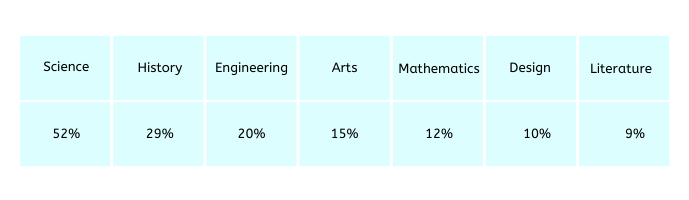
Virtual reality courses for science and history classes are most often developed at the moment. The virtual format, however, can literally be extended to any topic and theme.
Most students say they have a better understanding of the subject by studying complex material through practical tasks. VR is able to provide an appropriate and manageable environment for any type of training.
VR can assist in designing and modeling to progress to a new level of quality. This technology enables 3D model formation, presenting all the information and features, editing, transforming, and testing in virtual environments.

As visualization helps to understand and remember, students with training simulations can get even more immersive experiences. VR has proven to be capable of fitting any subject or program at the school and university.
The study suggests that rewarding instantly has a positive impact on the further success of students. Instead of typically pointing out errors and deficiencies, VR brings elements of gamification into the learning process and offers motivating reward systems.
The research claims that rewarding immediately positively impacts the further performance of the students. Instead of traditionally pointing out errors and failures, VR brings aspects of gamification into the learning process, offering encouraging reward systems.
These days millennials can perceive a bit boring studying traditional classrooms. Incorporating VR into a program is one way for them to enhance the learning process. VR may also eliminate distractions on a smartphone, in addition to generating interest.
The advanced way of visualization is the most obvious advantage of using VR in education (also true for any other sphere). Virtual reality has become a universal tool for displaying objects, processes, locations, and events in history.
The language barrier often can be a problem for international students. With virtual reality, it is possible to implement the study of materials in any foreign language into VR software.
It provides the complete immersion experience into ancient history. The VR tour guides viewers to the Tutankhamun Tomb with a 360-degree virtual environment filled with historic artifacts.
VR simulation recreates the July 1969 Moon landing events. It's a new kind of documentary where you can control and fly the command module, land the lunar lander, explore the surface of the Moon and deploy some experiments.
The Discovery Channel is continuing the work of investigating and sharing knowledge about our environment. Their new app, Discovery VR, provides the immersive experience by viewing virtual videos of our planet's amazing places.

One of Google's most visual apps, Tilt Brush, is helping to create art with lots of possibilities in 3D space. Students and artists can use any virtual space as a canvas by using a wide range of dynamic brushes and a variety of interfaces to create a true masterpiece and even display it as animated gifs.
It is one of the largest VR education platforms. The company creates a variety of VR content for schools (anatomy, visit ancient Rome, Athens and Stonehenge Acropolis, VR dinosaur learning, etc.) and corporate training.

 2265
2265
25 Oct
2019
5
min read
Virtual reality may well be seen in the industry as a crucial innovation that will improve the immersive 3D experience in your vision. Traditionally, a land specialist provides the client with a detailed description of the property. The clarifications, the transactions, and eventually the actual visits to houses and lands, come afterward.
Over some time, this work cycle has progressed as before, but in fact, it is poorly planned and redundant over both real estate agents and homebuyers. However, there is a distinct advantage and the way the land business functions. Virtual Reality- has changed as of now.
VR technology's strength will help realtors grow their market, attract more customers, and maintain a high-quality service. Currently, as 95 percent of consumers are searching for properties online as per a report by the National Association of Realtors, it is especially imperative to obtain this new innovation.
The land business is showing signs of recovery and sickness from a global financial crisis. Numerous business patterns and reports advise that the entire property framework can be revised over the years and that the ever-volatile market situation can have real consequences for property speculation and improvement.
When it first emerged, land professionals quickly adjusted to technology, and numerous land experts made an incredible impact with 3D imaging and 3D video rendering intuitive walk-throughs of the insides of their structures.
It allowed potential buyers and financial specialists to experience the space, design, and atmosphere of the structure without making a physical visit inside a premise from their PC screens. By approaching directly in-hand, there is no substitute for gaining insight into the home decor.

Be that as it may, be, land experts can add something new to the business process with virtual reality to improve the experience. For example, VR allows buyers and financial specialists to explore numerous properties in order to limit the rundown before visiting the site (possibly expensive and daunting). It also offers a practical representation of the structure to refer back to later, or to that buyer.
It also offers a practical representation of the structure to refer back to later, or that buyers can show their own customers and partners. Even better, there is no need for the structure- with virtual and expanded reality, buyers can visit a development that is still being created.
Equally, the wider development industry is upgrading the enhanced experience to exceptional effect. VR trains workers on everything from site security to problematic and clear pipes problems, which ensures that augmented reality helps business development and enhances the well-being, support and time to launch new structures.
A system that shows a home's current highlights, but also its future highlights. Digital staging is especially useful in promoting vacant townhouse or fun loft units.
By digital staging, a professional photographer takes pictures of vacant and living-in homes and digitally alters the stylistic design and furniture of a condo to produce an impressive initial concept for buyers or leaseholders looking for their next home. Digital staging allows a desire to stand out and shows the actual possible results of a home. Buyers and leaseholders may envision their existence in the condo in view of the likelihood of digital staging interfacing them with the building emotionally. For instance, virtual staging tools such as virtual redecoration, virtual furnishing, virtual painting, and virtual declutter offer limitless approaches for exemplary style show homes.
Such virtual instruments also provide proprietors with the adaptability to adjust the potential of a space to provide a wider range of imminent customers for all intents and purposes. For example, you can change an extra room by turning it into an office, arts, and special room or nursery for all purposes.
As stated by Trendnomics, the National Gardening Association, 99 percent of land agents admitted that a luring landscape attracts more buyers and completes deals. Virtual reality has become so amusing and less exhausting to find a loft or a house to live in.
Without anyone else, individuals can pick, they can't spend money on gigantic visits to different houses. Moreover, this new innovation obviously saves time as buyers no longer have to leave their homes. Virtual reality should make each of the visits possible and it is available at each point.
Virtual reality can make each of the visits feasible and it is available at each point. Real estate brokers will work more and more convincing and spend more energy to create a sparkling company and allow surface configuration variations.
It needs to be spoken to customers by Realtors and owners. To companies that sell seasonal vacation rentals, it could be a challenge. This technology allows proprietors to negotiate with tenants easily. Essentially, consumers could put VR headsets on and experience digital 3D experiences.
Basically, buyers can position VR headsets and experience virtual 3D experiences. This only takes a short period of time, but the vividness can be incredibly useful. 3D land visits allow buyers to see how property services work to keep them away from problems and unwanted interaction with owners.
Due to the high turnover rates, the use of VR technology is particularly helpful for the holiday rentals industry. Virtual resident guidelines improve the customer experience and bring benefits to tourists and owners
Matter port 3D Pro will test a 3D asset. These scans are then moved to the cloud and treated in just a few hours with different calculations.
The concept behind this joint effort is to combine 3D technology from Matter port with floor plans and digital visits from. This organization strengthens the management of reliable users but also brings new clients to Matter port.
Such digital visits are up-to-date and are increasingly becoming important in the real estate as they illuminate potential buyers precisely. R&D efforts are advanced to the point that it will be difficult to distinguish between VR visits and' actual' physical visits in the near future. The main benefit could be a massive reduction in consumer prices and substantial organizational adjustments
Such developments will one day become as omnipresent as today's touch screens, ensuring consumers will eventually expect VR experiences to be more common, more vibrant and with new highlights. The real estate industries must aim to integrate exciting stories with their VR encounters, like computer games and motion pictures.
A walk through a structure must, however, illustrate the structure by using storytelling to create an inclination in the mind of the audience