
Explore the latest trends and find our updates on all you need to know about what is happening in the world of web and technology.

 2777
2777
Blockchain technology has garnered significant attention since the introduction of Bitcoin in 2009. With its decentralized, transparent, and immutable nature, blockchain has the potential to revolutionize various industries. However, along with this growing interest, several misconceptions have emerged. This blog aims to debunk seven common myths about blockchain technology, providing clarity and helping individuals and businesses make informed decisions about its adoption and implementation.
Many people associate blockchain solely with cryptocurrencies like Bitcoin and Ethereum. While it's true that blockchain serves as the underlying technology for cryptocurrencies, its applications extend far beyond that. Blockchain technology can be used in various industries, including supply chain management, voting systems, digital identity management, and more. By offering transparency, immutability, and decentralization, blockchain can enhance trust, efficiency, and security in these sectors.
Blockchain is often mistaken for providing complete anonymity. In reality, most blockchains offer pseudonymity, meaning that users are identified by unique addresses rather than personal information. While this provides a certain level of privacy, all transactions are still traceable and transparent on the network. There are, however, privacy-enhanced blockchain technologies, such as Zcash and Monero, that employ advanced cryptographic techniques to ensure better privacy for their users.
Although blockchain technology boasts several security features, such as cryptographic hashing and consensus mechanisms, it is not impervious to all forms of hacking. Vulnerabilities like the 51% attack, where an attacker gains control of more than half of a network's mining power, can undermine a blockchain's security. User responsibility and secure practices, such as properly securing private keys and using multi-factor authentication, are essential in maintaining the overall security of a blockchain ecosystem.
The energy inefficiency myth stems from the Proof of Work (PoW) consensus mechanism used by Bitcoin, which requires massive computational power and electricity consumption. However, alternative consensus mechanisms, such as Proof of Stake (PoS), offer more energy-efficient solutions. Additionally, ongoing research and technological advancements, like Ethereum's transition to PoS with Ethereum 2.0, aim to address the energy consumption issue.
There are different types of blockchains: public, private, and permissioned. Public blockchains, like Bitcoin and Ethereum, are open to anyone, while private and permissioned blockchains restrict access and participation. Each type serves specific use cases and offers distinct benefits. Furthermore, although many blockchain projects are open-source, some companies and organizations develop proprietary blockchain technologies to address specific business needs.
Despite its potential, blockchain is not suitable for every problem or industry. Blockchain technology excels in scenarios where trust, transparency, and immutability are crucial. However, it may not be the optimal solution for use cases requiring high-speed transactions or data storage. It is essential to carefully consider the appropriate technology for a specific problem or business requirement.
Blockchain and traditional databases serve different purposes and have unique characteristics. While blockchain offers decentralization, immutability, and transparency, traditional databases provide faster transaction speeds and greater data storage capabilities. The two technologies can coexist, complementing each other in various applications depending on the specific requirements.
By debunking these seven myths, we hope to provide a clearer understanding of blockchain technology. We encourage readers to further research and explore the potential of this technology while being mindful of its limitations. Being well-informed is essential to maximize the potential of blockchain technology and make the most of its transformative capabilities.
As blockchain
technology continues to evolve, it is crucial to stay informed about its
developments, applications, and potential impact on industries
worldwide. Embracing a comprehensive understanding of blockchain will
empower individuals and businesses to harness its benefits while
mitigating potential risks.
In
conclusion, dispelling these myths is vital for fostering a more
accurate and balanced perspective on blockchain technology. As we
navigate the ever-evolving landscape of digital innovation, staying
informed and open-minded will be key to unlocking the true potential of
blockchain and shaping the future of technology.

 2482
2482
The year 2021 has witnessed an enthusiastic response of many people toward investing in various crypto assets across the global market. The trend has led to a consequential upshot, in terms of giving much more space of digital assets to the mainstream.
Meanwhile, the rise in popularity of cryptocurrencies has correspondingly prompted the rise of blockchain technology, which, as an upshot, gave rise to the importance of digital assets, with market capitalization soaring to $3 trillion in values during November 2021.
Statistically, close to 14% of people in the U.S. retain the ownership of crypto-assets while India has witnessed an impressive population of 15 million investors investing in digital assets. This is indicative of a rather encouraging fact, indicating that India is the second-largest country in the world going for crypto adoption.
With cryptocurrencies having no administrative authority to be circulated in the legal tender in India is a problem that the country's crypto industry believes should be handled on serious priority. The countries like India require a progressive and regulated framework that will eventually foster a thriving ecosystem of the crypto industry, inspiring more people with the confidence to invest in digital assets.
In this blog, we are going to discuss some top crypto projects that are likely to become game-changers in 2022.
Held in reputation as being the second-largest crypto network in the world based on its market capitalization, Ethereum is undoubtedly one of the biggest players in the DeFi (decentralized finance) space.
However, the network of this DeFi space witnessed a slowdown this year by a growing number of consumers making transaction on a blockchain that requires serious upgrade, Ethereum 2.0 which is still in the process of finalization, and is likely to be completed next year.
What qualifies Ethereum 2.0 to be so futurist is based on its ability to cut short the transaction speeds and costs.
Moreover, it will pave the path for the proof-of-stake protocol for mining that is considered environmentally friendlier compared to its existing proof-of-work model.
OVR, powered by the Ethereum Blockchain, is set to make a big headway in the moving spaces of metaverse next year.
This decentralized metaverse platform functions by merging physical and virtual worlds using Augmented Reality technology, offering crucial geolocation to help users how to easily navigate throughout the metaverse.
The company has recently released a new program called Map2Earn for users, allowing them to participate in a global treasure hunt and get rewarded by the platform's native OVR tokens.
Created by Charlie Lee in 2011, Litecoin is held as a futuristic replacement of Bitcoin, though the crypto is marred with its limited supply, say nearly 84 million units.
If we believe in the prediction of LongForecast, an Economy Forecast Agency, this peer-to-peer cryptocurrency (Litecoin) will touch the value of $200 by the end of 2022 and grow to $250 by the end of 2023.
Polygon framework is used to build and connect blockchain networks compatible with Ethereum.
This Ethereum blockchain or Ethrereum's Internet of Blockchains is one of the top crypto projects speculated to scale the blockchain's capabilities, linking it to other compatible blockchains.
It combines the best of Ethereum and sovereign blockchains, paving the path for developing a compact multi-chain system.
In its recent announcement, polygon revealed its shifting to Polygon PoS on Uniswap.
Corite is a NFT platform and was founded by Mattias Tengblad and Emil Angervall.
The Corite project aims at democratizing the music industry by incorporating a crowdfunding model. The purpose is to gain substantial distribution of revenue for musicians.
Corite project's blockchain is based on the mechanism, say getting funding directly from the audiences/fans who then get a share of revenue in return.
Solana is a public blockchain platform known for its impressive speed of 2,500 transactions per second with lower associated costs and without compromising on decentralization.
Based on this very attribute, the platform was termed as a potential long-term rival for Ethereum. The internal crypto of this platform is called SOL.
The currency has the application-building functionality which qualifies it a robust risk-reward dynamic in the future.
World Mobile Group (WMG) bases its functionality on combining renewable energy with blockchain technology with a mission to bring forth a new change in the paradigm of connectivity in Africa.
In 2022, the company will launch its blockchain academy to be able to host conferences to draw attention of experts worldwide and bring new talent to the region.
The WMG project is seen as a potential game changer for Africa's various war and poverty stricken regions.
It's not at all a foregone conclusion as to which way the crypto space will head in the year 2022, based on how faster the space moves with a certain degree of volatility.
However, one thing can be said for sure that cryptocurrencies will look quite differently in due course of time. Emerging new players and updated technology will reinforce the pace of crypto space, moving it to a tectonic shift of new heights.
The above facts also cast reflection of how important the blockchain application development would spell for companies worldwide to sustain, thrive, and stay futuristic in its business approach.
 1902
1902
Blockchain technology, if implemented in React Native framework can pave the path for performance-packed and productive mobile app development. Blockchain as a decentralized ledger of recorded digital transactions, and React Native as a JavaScript-based open-source UI software framework can constitute a great alliance together to build innovative mobile apps, promising performance and data security of next-level.
And why not? Take a look at how digital money or cryptocurrency, digital wallets, and NFT minting platforms rely on blockchain technology for iron-clad protection from data breaches. And React Native is simply a great framework for developing unique mobile apps featuring seamless user experience and user interface attributes.
If you know what cryptocurrency is, you may be familiar with blockchain technology, considering digital transaction of cryptos is not possible without blockchain that prevents third-party involvement during one-to-one (P2P) crypto transactions.
One of the most important traits of blockchain technology is being programmatically decentralized network architecture, eliminating supervision of any digital transfer from a centralized authority.
As a result, it allows complete privacy among members in the network.
Moreover, a decentralized network system is powerfully immune to hacking. It means the system is effective for your conventional database of mobile apps available on a server from being breached by third-party unauthorized access. In other words, decentralized app data on countless network computers are almost invulnerable to get penetrated.
Given blockchain technology's impenetrability and decentralizing third-party supervision, it may sound like a more complex and mind-numbing technology to implement. However, like most of the cutting-edge technologies, this one too is non-complex and easy to implement.
To conclude, blockchain offers more simplification than the Internet Of Things.
In addition, giant tech companies eye on the global promotion of blockchain technology by creating blockchain consortiums to gain cost-effective advantages like cost-saving, sharing risks, and bringing safety and transparency to their business operations.
This means you can allow your team of developers to get acquainted with blockchain processes through educative training modules, or hire a software development company if setting up a new team of developers sounds too overwhelming for your company's budget.
Since app data must require full-fledged protection from getting manipulated by third-party access, adopting blockchain technology in the development of mobile apps through React Native Framework is ensuring protection of app data from the danger of lingering breach amidst threats like Pegasus spyware.
Since blockchain is a decentralized network architecture, transactions of cryptos go through scrutiny using cryptographic codes, and an assortment of different security measures, programmatically designed to safely lock the block.
Blockchain technology can enable the implementation of SSI/ self-sovereign identity, helping prevention of digital identity theft of users. SSI is quite a robust authentication system ensuring world-class data security of user's app data.
React Native is an open-source framework to build mobile apps that can be constructively useful for the data security of mobile phone users if blockchain technology is implemented at the core of the app development process. React Native and Blockchain both can account for productive app development process, generating security-packed and unique mobile apps
If you are looking for a software app development service without draining your company's budget, a team of developers at Epixelsoft can be of use. They are profoundly experienced and capable of developing mobile apps for startups, SMEs, enterprises, etc.
 2014
2014
Blockchain is a modern way to store data in a distributed ledger that allows multiple parties to share access to the same information safely and with confidence. Today this technology is the prime reason behind a digital economy that is fair, inclusive, secure, and democratic.
Blockchain can provide applications with a variety of mind-blowing benefits. The USP of this technology is that the needs of any third party or intermediaries during the process have been removed. Strengthening, dependency, and a high level of safety are the key factors that attract users. It also builds trust between organizations while carrying out any transaction.
Blockchain is the technology that enables individuals and businesses to exchange their data, information without any hassle. It helps the organizations to reach agreement on transactions and details and to record them indefinitely. There is no glimmer to witness because it is free of any hidden costs and operates without a central authority.
Cross-border transfers are routine and occur regularly. This can be achieved on an individual and official basis, but there is no question that the expense and other importance of the move involved are costly.
This occurs especially when multiple currencies are involved, and this brings with it the presence of numerous banks at different locations around the world. And if all of this happens, only the receiver gets the money.
Here Blockchain technology cuts the needless distances and offers a more straightforward and cheaper alternative to conventional cross-border forms of payment. Blockchain has now turned out to be an accessible technology making the transnational payment process easier.
Blockchain technology is an acceleration of enterprise applications. Even as use cases are being studied for their long-term potential, technology also needs to be designed to counter more complex threats ever. Today, there are a few clues that can help to discover what potential security threats may be.
Soon, biometric identification is likely to be a standard identity verification method, in which multiple security protocols create a unique identifier that can be indexed on a blockchain. No data will be kept on the chain, but it will allow the consumer to prove who they claim to be. Blockchain is, therefore, a key feature in security.

Better growth of any company is a result of well-managed services. And such managed services can be accomplished only if you have an effective supply chain network. Today, a lot of businesses around the world are facing the brunt of a pandemic, and this has reduced the number of physical workers on the field.
This has given the stores a hard time handling their stock because no one is there to watch the services. However, with technologies such as Blockchain, holding a watch on supply chains and ensuring productivity becomes a cake-walk. It undoubtedly eliminates human efforts, and further smoothes the complex and crucial supply management process.
Smart contracts are one of blockchain technology's most and highly powerful functionalities. It is a mix of computer programs that will take care of every inch of your agreement, from facilitation to execution.
And to make it work, you do not need any expert advice, instead, you only have to meet those requirements. As a result, you should let it go self-executed and self-sustained.
Education is, in my view, one of the best ways of introducing any technology. It is even more critical with Blockchain than it is with others. I think all of this comes back to demand. The marketplace will respond accordingly as businesses see the merits of blockchain technology, and they get results: more suppliers, more skills, and more ideas. It has greatly improved education systems and made it available to potential users.
The International Data Corporation reports that IoT businesses have experienced the impact of blockchain technology. And this has led them also to suggest this very technology in their approach. Twenty percent of IoT deployments will allow blockchain services by 2020, as reported by IDC. Blockchain 's enormous benefits have given rise to numerous industries and businesses that accept it. Perhaps this is something that has and will bring more exciting things soon.
I think that standardization is still an open question. There is some real work done on standardization, but we need a global consensus on blockchain standards. It offers better interoperability, better sidechain support, and integration with conventional databases and traditional systems in which the ecosystem still needs to grow.
There is also a very large assumption that there is no difference between crypto-currency and Blockchain. If you mention that you are practicing Blockchain, what people believe you are going to do is spend the day thinking about Bitcoin. No, that is not the same thing. Meanwhile, in blockchain technology, we see more robustness and sophistication. It is much more advanced than it has been, and there are still so many great developments to come.
Blockchain technology offers a new framework for building innovative applications beyond cryptocurrencies, driving significant, meaningful changes through industry, culture, and society.
In this blog, check out how Blockchain Technology will further Accentuate the Digital World

Blockchain technology would potentially revolutionize the way we work and live. It can give us more power over our health and well-being, more in-depth insight into the source and nature of the food we consume, and the goods we purchase quicker financial transactions and more open and private at the same time and more productive industry.
Blockchain technology can provide a stable, scalable platform for two-way communication. And the new security protocols give it already a strong resistance to cyber-attacks. Blockchain will overcharge artificial intelligence and IoT to make it smarter and more secure, from supply chains to digital identity management.
 2195
2195
Remember the video posted back in May 2018 by Socialstiche Partij Anders of Belgium? The one where Donald Trump criticized Belgium for participating in the Paris Climate Accord. Or the one where Trump was a part of the popular series Breaking Bad?
These kinds of videos hit the Internet every now and then. They amuse users in a way that has never been expected before, with everyone believing those popular faces themselves have posed for those videos. This technique creates an almost-real video, however, using the power of human-image synthesis AI, i.e. Deepfake is expected to take a more sinister turn in the future.
Making a change from entertaining viewers and giving special effects in Hollywood movies is expected to be used for cybercrime and political scandals. In fact, cybersecurity experts have sensed that such videos will be employed at some point during the 2020 Election. This will have an adverse impact on the opinion of the public and may result in some ethnic violence. That's it.

In the tech world, this generated an urgency to find a way to combat these deep-faced videos. Various tech experts have already begun researching every possible way to fight back these videos; the one created to give a realistic look using the latest technologies such as Artificial Intelligence. And guess what, Blockchain is one technology that has come up as the appropriate solution.
According to the tech experts, technology has all the ingredients like consistency, immutability, and decentralization that can help to differentiate between a real and a fake video. And finally, its effect is lower.
When it comes to the deep fake field, emerging technologies such as Blockchain will come into the forefront to provide some level of security, acceptance, and validation, "said Kevin Gannon, PwC tech blockchain leader, and architect solutions. He added," Blockchain has traditionally been proclaimed as a play of visibility and transparency, where once something is one, the' who' and' when' becomes evident. Yet, it could go on! If a person with a digital identity tries to do something, they may be asked to prove their identity before they can access it. Let's use one example to simplify it.
Suppose a video is coming onto the market. Since all data is stored on Blockchain that is governed by consensus algorithms, you will be able to access the file's hashcode and compare it to the one recently published. If the comparison result is not true, then it will make it clear that the video is fake.
Moreover, since proper smart contracts are written for each transaction, intruders will find it harder to secretly steal somebody's information and make a deep-faced picture. Therefore, the technology will help differentiate between actual and' nearly real' images and will resolve the likely negative effects.
This platform allows people to create challenges and to encourage others to complete it for real money in return. Others are recording and sharing their videos on the platform which others then like and share. The one which receives the highest traction earns money.
The algorithms of the platform crawl every profile here and search for any drastic change. This could be anything like a person who is now betting for $10,000 making $3 challenges or some odd pattern of app use.
Eristica also uses the YouTube and Instagram algorithm to find the copyright content from both the audio and video files. We also use a third-party search algorithm to split the video files into several frames and use the' image search' method to search for their source file.

In addition, the validity of the user and content is checked every time he interacts with the Eristica community, through a manual moderation process. The platform thus relies on Blockchain and Artificial Intelligence's combined potential to detect and combat deep-faced videos.
This, however, is not the end. It is expected that the dual technologies will penetrate numerous other industry verticals such as Finance and Advertising to ensure that the deep-fake strategy is not used to steal money or other illegal activities. And, of course, to guarantee that no fake video or marketing stunt will impact the 2020 elections.
 2351
2351
Blockchain technology has made major inroads into sectors such as healthcare, immovable property, education, and even in the legal sector. This technology will soon have a significant impact on the entire mobile app ecosystem as well. Its decentralized architecture provides some amazing advantages that nearly all industries can take advantage of this technology.
Blockchain is the latest hot trend technology, as it makes it easier for companies to securely distribute data across networks. As we have seen above, it has transformed all industries such as healthcare, real estate, education, and the legal field, and it will also soon have a major impact on the entire mobile app market.
Upon learning how blockchain supports industries in the form of digital currencies like Bitcoin and Cryptocurrencies and we are fair enough to know about Blockchain App Development Services containing distinctive features. We shall look at different ways in which this technology has greatly or will greatly reshape mobile apps.
In the app store, there are some mobile apps that anyone owns, can't tamper with and can't have downtime. This form of the mobile app was integrated with Blockchain technology which operates through peer-to-peer networks. The system developed by Blockchain helps keep track of all information transfers called this database a virtual ledger. The transaction is reviewed by each data shared on the network
This program implements decentralized functionality checking every shared data on the peer node network. The new block has been applied to the network when checked and approved and is unable to alter. No central authority governs decentralize characteristics. It ensures that nobody can delete or edit it and even upload it without the approval of the main participants.
Changing the business system that operates without spam or detecting if any fraudulent thing has been conducted. With the Blockchain app development phase, the growing popularity of blockchain in every sector generates many possibilities that change the entire business model.
The secure system operates through the steady transfer of data across the network so that no system members can hack or manipulate the distributed blocks. The blocks are created with a cryptographic line that helps prevent an unknown individual from going through a revamped process.
The blockchain provides unique features in distributed ledger technology which stores data securely across the peer-to-peer network. Blockchain ledgers can include land documents, loans, credibility, property, and stock, etc. that can be held tightly, where everyone is allowed to view but can not change the shared results.
The Blockchain is fully open to all, when one of the members in the network has recorded information in the block, it can be viewed by all but can not change the information recorded in the digital ledger.
Each block includes hash present and past information, the stored data depends on the blockchain form such as bitcoin, cryptocurrency, etc. This type of block is normally used to store and exchange digital assets, coins, etc. Blockchain facilities, peer-to-peer transactions without mediator intervention, and eliminates all intermediary activities once two-party transactions occur.
This is the application database used to handle all types of transactions in the network and this is not operated by an individual because it is available on that member's device. Keeping all payments up-to-date is constantly monitored. The cryptographically shaped process protected helps prevent hacking and spamming.
Nevertheless, there are many advantages to how blockchain technology affects infrastructure in the creation of mobile apps. It offers accountability, performance, and security features that help developers use to enhance the production of apps. In addition, blockchain-based technology has provided a number of companies with the potential of doing certain things including mobile app development.

Nevertheless, this creates new possibilities for developers of mobile apps. The blockchain capabilities are very useful to increase the productivity and profits of enterprises, as they help build trust between network participants. The platform includes a network and wide group of companies and investors which handles all operations safely through software.
 2683
2683
 21 Oct
2019
21 Oct
2019
 6
min read
6
min read
Each industry on the planet is in question as to whether the Blockchain technology will be its most influential asset or its greatest threat, and companies are moving rapidly into space, guided by a fear of missing the "Next Big Thing."
Organizations, as well as researchers, obviously learned that Big Data is a great treasure. However, if that is the scenario, the more information the company can hold, the more it makes sense. That's not evident in any case. "It's not the amount of data that's relevant. It's more important to what they do with the data.
Well, Blockchain is nothing but a distrustful database that can monitor economic transactions that can not be changed or manipulated. The technology has become a force to be taken into account due to the popularity of bitcoins.
Since then, however, blockchain has found significance in tracking not only digital transactions but also anything of significant value. Understanding the strengths of this growing technology, Blockchain designers and entrepreneurs, as well as tech enthusiasts, have become involved in the development of Blockchain use case after use case.
Blockchain has been recognized since the internet as the most significant technological step forward and has credited with encouraging data democratization. Due to the incredible technology that helps people to build trust over the network, Blockchain has enabled various new fields of the application.
Individuals are highly accountable for their digital assets and knowledge with blockchain, and this can render data centers completely commercial. This is the explanation behind a huge demand for Blockchain Development companies under big data to create a safe Blockchain.
To understand the Blockchain needs familiarity with its specific features, which together resolve numerous issues similar to conventional data systems. The most significant five characteristics of these qualities are noticeable:
Data is transmitted between blockchain addresses. It ensures confidentiality and allows customers to remain anonymous in the meantime. Well, if the blockchain is set up to require proof of character, privacy is not essential.
Unlike conventional databases held on a single PC or server; blockchains are distributed documents that are theoretically open to anyone on the network. There is no single control function in a blockchain, which is special.
Any transfer of blockchains creates a record that is immutable and can not be changed under any conditions. Records are organized in series and are available for all users in the chain to see
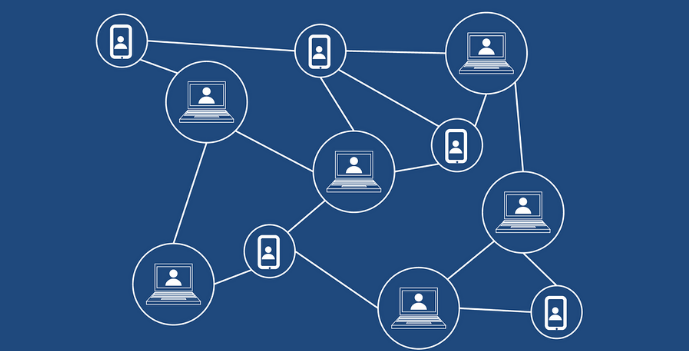
Because there is no single control purpose, blockchain information is transmitted directly from one client to the next. Each single data transmitted updates the entire record in a split second, so everyone on the network has a similar form of reality.
Since a blockchain can be connected to logical logic, program functions and exchanges can be conceived by guidelines and algorithms.
The technology contributes to data storage advancements. By eliminating the normal storage methods, companies may improve the quality of information as it is finished and structured. However, entering blockchain into a Big Data Analytics system improves the work by reducing its week points. It generates consistency and encourages comprehensive analysis.
They give an approach to recognizing clients on the web using private keys that can not be forged cryptographically secure. This allows the personal information of the individual to be linked to their private key and to provide them with legitimate advice whenever the data is requested.
Excessively broad and complex for the implementation of traditional computer programs. Machine learning and data mining are two forms in which these extensive knowledge sets can be decomposed to gather underlying data. Big data can be used to find out about navigation layouts, structure language handling and even help train vehicles that are self-driving.
Big Data and Analytics can be managed via blockchain by streamlining access to information. Within the organizations, clients in different divisions can be done as part of the blockchain, where they can get the data or information needed for the investigation procedure. It simplifies the work process and also abbreviates the performance.
Because data security is a prime objective, centralized processing of data is highly unreliable, as can be seen from the various reports of information leaks from top Facebook organizations. A hierarchical method of storage of information suffers the ill effects of a single source of failure and is defenseless on the internet to hostile staff and toxic hackers.
Decentralized storage of information is one of the blockchain's most essential benefits. By using the unused extra storage in the phones of individuals around the globe, companies including FileCoin and Sia are aiming to interrupt the cloud services While Big Data prepares advances, it will be important to continually increase the ability.
The introduction and integration of blockchain technology as part of the Big Data Analytics models could reduce space expenses to an impressive level. Changeless data turns into a business resource as it conveys insights that can be used through empowering long-term business choices over a long period of time.
If collected from a third party, a lot of resources are expended on manually approving data. By automating data authorization using smart contract software, Blockchain will greatly reduce this overhead and decrease flatulent information.
Big data blockchain is poised to be an amazing asset for both big and small companies of all sizes. Developing information and ongoing hacks of information are strong signs that blockchain is a major innovation that supplements big data and reclassifies the way we manage information.
If you are searching for blockchain technology to be applied in your business then you are in the right place. With our reliable and high-performance quality-based services, we solve your daily business problems. Hire developers of Blockchain applications development today and we will help you through your company solutions.
 3568
3568
18 Oct
2019
5
min read
Ripple is an electronic, distributed network system set up in 2012 to transfer payments. It was launched through blockchain technology in the market to support international payment. The Ripple App's main objective is to securely facilitate the transaction between banks and consumers.
It was developed with the digital age of technology in the current banking system and essentially is widely important for its services.
Ripple's creation is designed to secure efficient transactions for banks making it quicker and more convenient. It is, therefore, a more effective choice for large financial companies to cryptocurrency. Although Ripple is often used to link with XRP cryptocurrency, it is simply a business that most of the XRP run.
The first thing you need to know is that Ripple is both a currency and a platform. The Ripple platform is an open-source protocol designed to make transactions quick and cheap. Unlike Bitcoin, which was never meant to be a simple payment machine, Ripple will definitely rule all international transactions around the world. Good ambition, but who knows? The exchange of currencies can disappear.
Integrated with Ripples ' Blockchain Development platform allows businesses and financial organizations to collaborate with a variety of activities that promote money transfer. The Ripples Blockchain system helps to integrate a banking transaction system for financial firms to reduce costs while using transactions from Cryptocurrency.
XRP is a virtual currency used by the Ripple Program to send and receive money. XRP's main goal is to be effective for other people as a mediator - both tokens and order transfers. XRP, the digital asset token, supports other digital funds as a middle channel.
RippleNet is a network of institutional payment providers such as banks and money services companies that use Ripple-developed solutions to provide a friction-free experience for sending money globally.
It does not differentiate between one fiat/cryptocurrency and another, and thus makes it easy to exchange one money for another. Each ecosystem currency has its own gateway.
Why did Ripple work with XRP? Ripple's Inner Working Settlement Solutions for Banking and Financial Organizations would boost cross-border payments for transactions between two participating banks. We use matching banks to channel their payments in fund transactions such as messenger to organize data.

This communication process between banks and the ledger uses the internal protocol to shift the movement of the fund between banks for payment purposes. This exchange kept in the messenger is like an intelligent portal on the transaction level.
XRP is a token used throughout the Ripple Network to represent value transfer. XRP's main objective is to be a mediator for other exchanges-both cryptocurrencies and fiat. A' Joker' is the best way to describe XRP. Not the creepy enemy of Batman, but the card that is like any other card. If you want to exchange dollars for euros, you can use dollars and euros to minimize them.
The one payment is kept at a time through the whole payment process, in which the translation layer parses the message and gathers the information required to trigger the transaction.
James in the U.S. wants to send 500 Euros to Jenny in Germany, the sender meets with the appropriate recipient banks to collect their payment processing fee and total costs. It includes compliance testing and account confirmation, where it verifies that all banks have required information and can pre-validate.
The exchange before moving funds to ensure a high transfer speed manages the flow of funds in the network across these three separate organizations ' private protocol ledger. The originating bank holds the Nostro account with the corresponding bank and the recipient bank uses third-party liquidity provider to connect to the corresponding bank to start the settlement process.
Ripple manages the settlement process and maintains the funds across all three ledgers and produces cryptographic signatures to validate the payment funds committed. After all, these transactions are released through the network of committed parties once the funds have been completed. This form of mechanism does not result in any risk
Payment for payment is either completed or failed. The system provides all stakeholders with full notifications within seconds and offers end-end transparency in transactions. Below are the significant benefits of Ripple. Transactions performed in seconds end-end visibility Increased transfer speeds Administrative cost is low and many more benefits.
In the execution of financial transactions, each participant in the Ripple network viewed as a customer that everyone participates and can form a transaction. These transactions in Ripple are actually related to transactions in Bitcoin, but with some variations.
Originally designed as a day-to-day payment system, Ripple is much simpler than Bitcoin. The payments are much faster & cheaper as the outcomes. Ripple started as an official organization because banks ' main focus is to use it. Therefore, like many other cryptocurrencies, it is not a target for numerous regulatory tests. Ripple has the right to trade with a single minimum fee to any currency or commodity. The most significant exception is that a method of raising liquidity is often created by the Ripple transaction. That means, when banking wants to move the transfer of your fund to your car dealer's club, your bank will want to identify which other banks, organizations, or individuals are linked to the account of the vehicle dealer in the Ripple process.
Ripple provides the concept of transferring money internationally using blockchain control. By engaging in the application of Ripple, the global system, financial systems can make immediate, possible and cost-effective transfers for their customers anywhere in the world. The digital currency XRP can be controlled by banks and payment providers to further minimize their costs and new sales.