
Explore the latest trends and find our updates on all you need to know about what is happening in the world of web and technology.

 2165
2165
The evolution of technology, storage, and processing power has contributed to the embodiment of cloud computing and its growing popularity for critical business support functions. A more advanced, cloud-based technology is now replacing the long and costly cycle of purchasing servers, Software, licenses, and equipment.
Pivoting into the cloud can be a considerable challenge. That is why the platform you select is going to be a significant choice that could potentially impact company goals in the short and long term. Below we compare the two major players on the market, Oracle Cloud VS Amazon Web Services ( AWS), to find a solution for the needs of your database management system.
Oracle Cloud is a cloud computing framework that incorporates the applications Infrastructure as a Service (IaaS), Software as a Service ( SaaS), Application as a Service ( PaaS), and Data as a Service (DaaS) within Oracle's cloud infrastructure. Oracle Cloud provides seamless workloads for enterprise users and developers that meet server, storage, device, and network needs. The four Oracle Cloud services are;
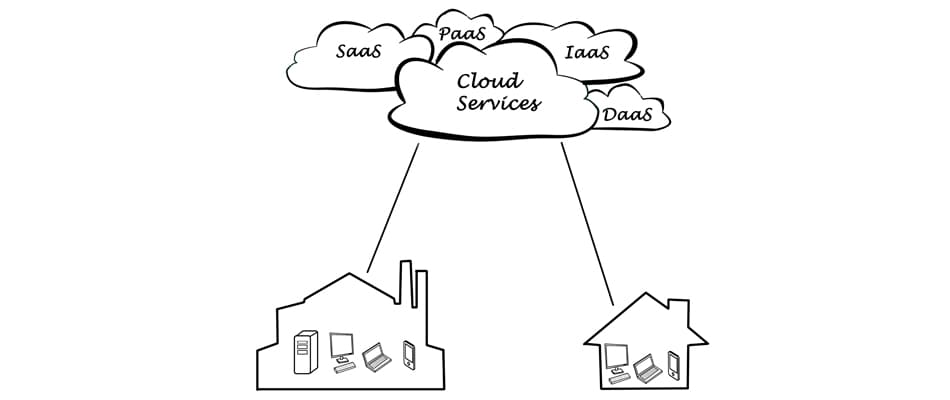
Oracle Cloud Platform (PaaS)
The Oracle Cloud Platform enables users to develop, deploy, incorporate, and expand cloud-based applications. Oracle leverages artificial intelligence with mastering the machine to offer automated solutions to organizations.
Integration: This service provides adapters that support databases on-premise and cloud.
Information Management: It is a data management framework consisting of transaction processing, data storage, and no SQL database autonomous solutions. It is the first on the market to have an independent database.
Protection: The Oracle Cloud Platform provides end-to-end protection by controlling the specifications of a hybrid cloud setting, IT governance, and compliance.
Application Development: It is a free, standard-based, and standardized application development framework built for large-scale enterprises wishing to create and operate first cloud applications for mobile and APIs. It facilitates the creation of native, cloud-based, and low code containers.
The IaaS solution from Oracle enables users to develop and run a large number of applications and services in the host environment of Oracle. The programs encompass:
Networking: Oracle offers flexible Virtual Cloud Networks (VCN), routing, IP addresses, and firewalls to enable continuous protection of private networks.
Compute: Oracle offers Virtual Machine instances to clients configured for varying workload rates and business efficiency.
Database: This service provides reliability, data security, and granular controls for Real Application Cluster (RAC) users in one reliable cloud environment.
Storage: Oracle's IaaS provides block length, storage of archives, and storage of items to fit client needs from small websites to larger, more demanding applications for businesses.
This framework utilizes Oracle ID Graph to access external data, offering consumers a cross-channel market understanding that intended for advertisers and companies who want to understand customers deeply.
SaaS solution used by Oracle is known as Oracle Cloud Applications. These cloud-based systems deliver distinct, industry-specific products and services for uniform features, with different implementation choices. From artificial intelligence to the Internet of Things Apps, the industry offers everything.

Amazon Web Services (AWS) is a cloud service provider that provides solutions such as Network as Service ( IaaS) and Application as Service ( PaaS). Amazon's offering cloud service offers server, storage, networking, email, remote computing, and security solutions for customers. Below we define the most widely used AWS services, which are divided into four categories:
Amazon DynamoDB: This is a completely managed AWS-based NoSQL database service offering high scalability and versatility, ideal for Smartphone, gaming, and ad tech solutions.
Amazon RDS: Amazon's Relational Database Service (RDS) is a related and accessible Web service for MySQL and Oracle Server. This supports users in managing and configuring cloud relational databases.
Amazon ElastiCache: This service is completely controlled in-memory cache and data storage service suitable for high-performance cases close to DynamoDB ones.
Amazon S3: Easy Storage Services (S3) offers infinite storage space through the cloud service interface. It is the cloud storage that is most supported since other AWS resources addressed here will read and write from S3.
Amazon Glacier: This method is used for archiving in the long term. This ensures that backup products in deep storage are safe and stable, even though they are rarely used.

Amazon EBS: The Elastic Block Store (EBS) of Amazon provides volumes of block storage for the EC2 instances. It is preferred to store permanent data and can vary from 1 GB to 1 TB in storage capacity.
Amazon EC2: The Elastic Storage Cloud (EC2) from Amazon provides customers with a resizable computing ability so that customers can launch as many private virtual servers as they need while retaining the security and networking features.
Amazon CloudFormation: Helps users to customize many on-the-go AWS services with common language capabilities.
Amazon Elastic Beanstalk: Helps deploy and manage web applications, benefiting from maximum capacity distribution, load balancing, and more.
AWS IAM: Enables user identity management capabilities and user access control of IT administration on different AWS tools.
Main Differences: AWS VS Oracle Cloud
Ensuring that the best cloud storage provider meets the database needs is a critical business decision. Considering that Oracle Cloud and Amazon Web Services (AWS) are one of the two largest players on the market right now, the key differences between each platform have been narrowed down, and detailed below:
Oracle Cloud came onto the market in 2015. Oracle had a very robust set of product offerings, such as Oracle Enterprise Performance Management, Oracle Enterprise Resource Planning, and more. The firm has established its expert presence in the software and software licensing solutions field.
Amazon has established and hosts some of the largest and most notable public clouds, such as the cloud database of SAP Hana, Netflix, and Instagram. They have built a wide presence in the market where their expertise serves as a significant competitive advantage.
Oracle currently offers a price cut for long-term customers who already pay a discount for licenses to applications like Middleware and database if they choose to run their software in the cloud.
Amazon Web Services (AWS) provides a pay-as-you-go fee model that gives customers flexibility over how many services they need to add to expand. Users can save money when they book for services such as Amazon EC2 and RDS. Investing in reserved capacity is equal to capacity on demand, meaning the higher the initial cost, the higher the discount.
Oracle Cloud also provides a pay-as-you-go model where, according to their website, the laaS and PaaS services are calculated hourly and paid only for the resource consumed.
Because of the vast options that Oracle Cloud and AWS provide for their cloud solutions, they rely on a wide network and a range of partners to support it. Users are able to get customized solutions and support services based on the particular industry and organizational needs through their partner community.
The AWS Partner Network (APN) offers technological, marketing, and go-to-market support for AWS-based businesses. They provide the resources and support for the partners to advance specific business needs.
The Oracle Partner Network (OPN) is somewhat similar, as it offers the actionable opportunity to migrate to cloud-based services for companies.
The AWS payment model makes quick adaptation as business requirements change and fluctuate. Organizations will be able to pay for services as required. Users can also leverage flexibility when it comes to Oracle Cloud depending on how often they will need to rely on services.
Defining which platform would better fit business needs is critical among the two competitors. Whether it's business-sized enterprises or small companies, data and cloud infrastructure needs are increasing rapidly.

 4016
4016
Flutter is an open-source SDK that enables developers to create mobile apps for platforms such as iOS and Android. App development is a complicated and expensive process, and Flutter SDK provides developers with an unparalleled opportunity to cut costs in a variety of ways. With a layered framework, Flutter is empowered so developers can create highly customizable and attractive device solutions in less time without sacrificing results.
It is also much more relaxed and comfortable with making changes in the Flutter codebase as it possesses a hot reload feature that represents instant codebase changes within milliseconds. We will look into some of the reasons why Flutter is considered cost-effective by the Mobile App Development Company as compared to native Android and iOS apps.
Hot-Reload is a beautiful function that allows the developer to track changes in real-time. It lets the team add advanced features, innovate, and repair bugs. In return, the overall build time is reduced rapidly, which reduces the time needed to build the app. Flutter-integrated apps primarily rely on built-in widgets, not platform widgets, so the app's size can be estimated above 4 MB.
Since Flutter comes with a wide range of widgets, including navigation, scrolling, and fonts, developers can easily save time in creating apps. It is not, however, the ideal solution, and has other drawbacks. Overall, it overcomes the obstacles of creating apps that take 2-3 minutes to see the changes.
Rapid mobile app growth is a significant obstacle for business companies to achieve a maximum user base. Flutter is open-source with flexibility across platforms and features of hot reloads. Those features make it the best option for mobile app development and hitting the market quickly. The same code is used for Flutter to function on both iOS and Android. Hot reload debuggers faster to create an excellent app quickly.

The very first thing that reduces costs is the creation of cross-platform software. It offers a single framework that can help developers write code once, and runs on multiple platforms. Cross-platform development is not a new phenomenon and is still being used and funded by organizations and software developers. React Native and Ionic also support the development of multiplatform software.
For mobile app creation, Flutter makes it easy to create an app that runs on all platforms. It also enables developers to take advantage of the native features iOS and Android deliver.
With many startups on the market, a Minimum Valuable Product (MVP) required to make a smooth deal with the investors. It would be best if you had an MVP that operates on multiple platforms so you can view its functionality over them. Flutter will help create MVP, thereby saving time as well as costs.
The total number of line codes is almost tied to the cost of the project. Flutter uses Dart programming, which is an object-oriented programming language that is strongly typed. Additionally, JavaScript does not need to function, and thus improves the overall performance of the mobile device. All widgets compiled on different platforms.
All of this means you need to write less code to achieve the same level of efficiency. Other key features that help Flutter in writing useful performance apps include JIT compilation, AOT, and Hot-Reload.
Flutter is an open-source, and users are not supposed to pay to use it; you can rely on the active and vibrant community to form trend innovations into the framework. The only investment a firm or startup has to make is to recruit developers of mobile applications that can work with Flutter SDK.
It is simple to learn, and this means developers can ramp up and create mobile apps in a short period. Hot-reloading works once again in support of new learners.

Yes, Google Flutter is an open-source framework that helps developers create mobile apps across the platform. Google is not fighting for the development of the mobile app, as it has both Android and Flutter as SDKs for the web device.

Flutter is based on Dart, and in 2011 Google launched this programming language for users and is not so popular among developers. For JavaScript, Dart has a straightforward syntax to implement, since it supports most object-oriented concepts.
Some of the well-known brands which invested in Flutter are:
Flutter is a free, open-source platform for mobile applications built by Google. It provides developers with a fast and robust way of developing native apps on both IOS and Android. The Flutter is the only SDK that offers reactive styles without any Javascript bridge being used.
Flutter is the open-source, Google-based Dart language that will undoubtedly evolve in the future market scenario and bring down the gap between the tech world and industry. So, Flutter is the perfect choice to go with most of your mobile device startup needs.
Flutter has a limited effect on the cost of the project, and its cross-platform features, less code, less time to market or MVP, and Hot-Reload are the key reasons behind this. Although it is experiencing fierce competition from React Native, Flutter App Development Company is in huge demand due to performance advantages. It will emerge the best in the longer term.
10.png) 3039
3039
In this article, we will be discussing what web design trends are going on nowadays. We will throw some light on the top 5 web design trends that will be changing the look & appearance of web applications in many ways in the coming time.
After looking at different kinds of websites & mobile apps, we can easily come to know that current web design trends are an absolute mixture of the visual side of graphic design and the high-tech side of evolving technology. It can be seen that the technical possibilities seem endless and designers play with extremes, reinvent previous styles, and ceaselessly experiment with new techniques. Some popular styles such as the ever-present minimalism and colorful flat 3D illustrations will not go away anywhere as we've been seeing this for some time now. Let's discuss the top 5 web design trends now:-

People always delight with 3D visuals, this trend had lost its existence but what held this trend back was technology. The technology is now in a place where you can design in 3D through different available software in the market. Interactive 3D graphics & illustrations encourage users to stay longer on your website. In 2020 and in the future, we expect to see more immersive 3D web designs breaking down the boundaries between digital space and reality. Not only for UI perspective, but this is also an advantage for UX as well.
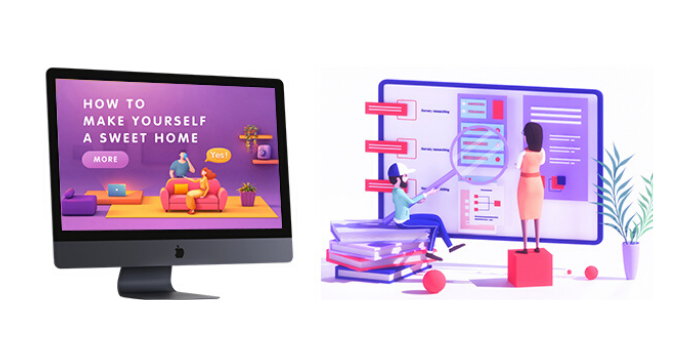

We often see that one of the main trends of the coming time will be dark design, mainly focusing on giving users an option to enable dark themes. Dark mode web designs not only look ultra-modern & eye-catching, but it makes easy to pop colors and design elements.
Actually, dark themes are better for OLED screens saving power and extending screen lifespans. But this utility doesn't stop them from looking good. Dark backgrounds improve the visibility of other accent colors as well. Hence, this trend has been growing its power for some time. We are definitely going to see more & more dark background designs in the future.
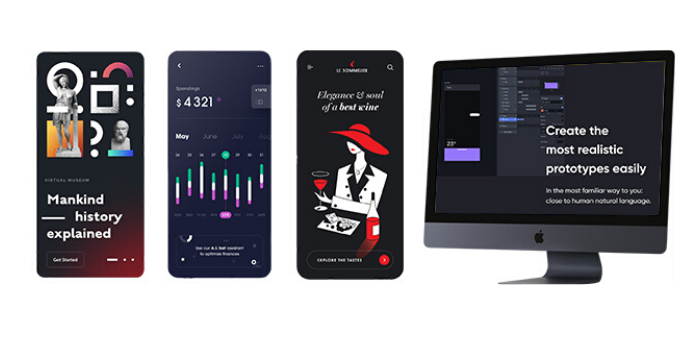

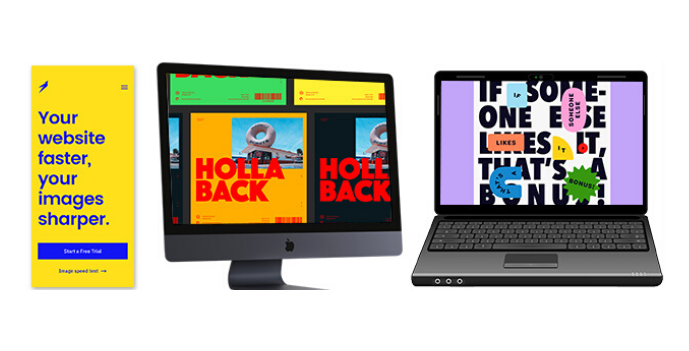
Typography in design is another strong aspect of UI/UX that holds users to stay on your web page since this is the design element that delivers the actual purpose of the website. A design should honor the message that the product's creators want to deliver to their users. Bold typography helps designers to achieve that. Oversized fonts serve a functional purpose they make it easy to read the text. Look at the following examples that convey how powerful a bold & oversized font can be:

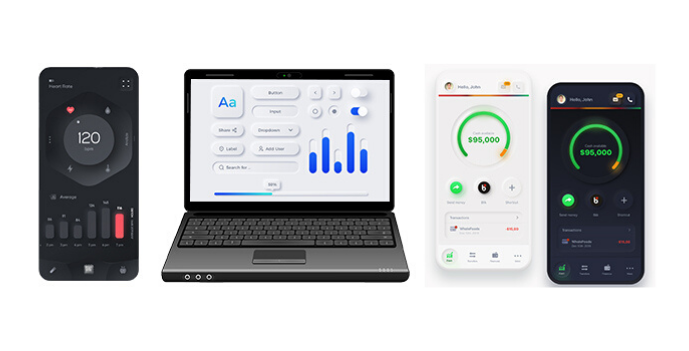
The neuromorphic design actually pretends to extrude from the background, it's a raised shape made from the exact same material as the background. This effect is achieved by playing with two shadows, one at negative values while the other at positive. But for it to work, our background cannot be fully dark or fully light. It needs at least a tiny bit of tint so both dark and light shadows will be visible. These kinds of designs are now playing a vital role in the User Interface. Web designers also think that this trend will get stronger & more effective in 2020 & ahead.

Another best website design inspiration we are seeing is the micro rotating animation trend. These types of animations leave users curious for more because they feel interacting with the screen or interface directly.
Therefore, micro & effective animations are extremely helpful when it comes to guiding users through their interactions with your website. Not only eCommerce companies but other small & medium enterprises are also using micro animations to enhance the user experience and give their customers a taste of what their products are like.

While these web design trends are surely changing the look & style of User Interfaces. The UI designer's job is playing with the shapes, so every time the shape turns out a bit different or new it's bringing a bit of that joy back. This is the constant exploration of designers that make all products look quite different from one another. But this is also to be kept in mind that each new trend comes with caveats and has to be carefully designed to be usable.
Thanks to this multitude of different design trends, movements, and styles it's safe to say that web design in 2020 & coming future will be full of surprises.
 8379
8379
E-commerce together with grocery apps and other vital services are in greater demand today than ever before. It is because of the rise in cases of Coronavirus. As with many other sectors, the COVID-19 pandemic has severely affected the education market. Besides these apps, educational apps are also receiving remarkable feedback.
Universities and schools are switching to virtual classrooms to break the virus transmission chain and ensure the academic year of students is not wasted. Meanwhile, universities and schools which have already invested in the production of education apps remain ahead of the game. And if your institution still runs on the legacy network, then it is the right time to turn to an online platform.

We are going to find out some of the benefits of using e-learning apps for both students and educational institutions. We will also direct you through the process of creating mobile e-learning apps to help your company remain competitive, profitable, and offer the latest features during the Coronavirus outbreak.
E-learning
E-learning is a method that enables users to learn how to use new and emerging technology, including educational applications, services, online channels, podcasts, forums, and other online resources. It makes learning interactive and exciting with full user control as needed.
Importance of using e-learning
The learning app developed is built to offer a solution; that is, to give on-demand learning. But if you have a learning app that has an enjoyable user interface, then this approach is said to be successful. It helps to deliver the content effectively. A straightforward interface lets students concentrate on the content, which is engagingly combined with multiple dimensions.
When your mobile app user subscriber grows during the coronavirus outbreak, the traffic load will eventually impact the results. Your software needs to follow different requirements, including the current versions of the operating systems, security upgrades, and facilitate the introduction of new functionality to ensure the software remains viable and smooth running.
A smooth Internet link cannot be made accessible round the clock, mainly in countries where the Internet bandwidth is not of this standard. The Mobile App design services should, therefore, develop an e-learning framework capable of even working in an offline mode. It will keep the user informed, and they can use the app to enjoy the content whenever possible. Each downloaded module or material will give you a more in-depth insight into how useful the app is for education.

Push Notifications are a good user experience strategy and are not considered spam in comparison to emails and texts, which people feel are annoying. Such alerts are a perfect way to connect directly with users and keep them engaged. Push alerts share information about the new shipment, content to review, and other relevant updates.
Can I see the process of developing my E-Learning app?
Yes, progress reports on the e-learning process are typically provided at an appropriate time. We build your E-Learning app on our Development Server and share all credentials to monitor the rate of progress of your app.
How long does it take for the development of the E-learning app?
The time to produce a mobile app is basically calculated basing on numerous factors such as features, scalability, server hosting, and functionality.
Do you offer maintenance after app deployment?
We are offering extended maintenance plans to our clients. We also fully support the app that we design and develop if it faces any problems or needs any improvements. In addition, our team offers complete maintenance and support of mobile apps.
What is e-learning on the mobile?
Mobile learning, also called m-learning, is a great way to access learning material at any time or place. Learning with mobile device support is more demanding than conventional learning. You can learn wherever you want. Educational systems have significantly changed with the rise of mobile learning.
Are you assuring the device idea of protection and confidentiality?
Yes, we are signing an NDA to protect your idea and information about the app. Therefore we ensure the full protection and privacy of the project for the creation of mobile apps.
The e-learning app development industry has seen a massive surge in recent years, thanks to growing technology. And with the coronavirus threat, there will be a surge in demand for online learning. Educational apps are making the learning process engaging, interesting, and, above all, easy to access. The features and benefits of the above app will surely help you invest in them and give your users valuable stuff to learn better.
 2830
2830
Developing a new business app is definitely a great move that can help in taking a company to new heights of success. However, the task becomes a little tedious among the plethora of platforms for mobile app development to choose from.
Desktop cross-platform development is highly regarded due to the numerous benefits it offers in comparison with the development of native apps. In this blog post, we'll compare Flutter Vs React Native Vs Xamarin's top three desktop cross-platform development platforms to help you make a better choice when it comes to developing apps.
The overall number of mobile apps on the market is growing every day. The figures and statistics are likewise indicative. In addition, the total number of mobile apps developed over the past 10 years for Apple App Store and the total apps projected for the coming years indicate different results.
The development of mobile apps across platforms brings with it a range of benefits that are otherwise lacking in the methodology of native development. On the other hand, there are also some deficiencies which make cross-platform development slightly less successful than native development. Let's take a look at these two-
Flutter, React Native, and Xamarin ranks among the top three development frameworks for mobile apps across the web.
A highly popular open-source framework for cross-platform mobile app development, the Flutter framework is highly popular among front-end developers.
The Flutter framework is highly popular among front-end developers as a highly popular open-source framework for cross-platform mobile app development. In addition to providing excellent user interfaces, the platform makes code reusability from 50-90 percent. It makes use of Dart to create high-quality applications.
Large device size: It encourages developers to reduce the number of libraries and compact images in order to make necessary adjustments. The average Flutter app is 4.7 MB in size which is quite large compared to a standard 1 MB Android native app. Native API: As there are many non-native APIs, packages from third parties may be needed.

It is the oldest cross-platform mobile app development system that carries with it a host of pros and cons when it comes to developing mobile apps. The architecture makes up to 96 percent reusability of code. Starting with Xamarin is simple as the framework allows the user to create the UI in two ways.
Native-like application output Full cross-platform application development system Open to small teams.
Delay in updates: As new platform updates take some time to represent in Xamarin software, problems with app performance can arise. The creation of complex applications is time-consuming compared to native apps.
React Native was developed by Facebook in 2015 and is another common mobile app development system across the internet. In addition to allowing developers to write few components using Swift, Objective-C, or Java as & when necessary, the framework makes efficient use of the common high-level programming language JavaScript.
Having native UI controls means an excellent GUI, and hence an app experience with React Native similar to native apps. It even makes total re-usability of 90 percent of code.
High-quality user interface: Apps look like native apps due to native UI implementation Faster development time: due to the availability of ready-to-use UI components Native Functionality Access: camera, accelerometer, etc., accessible Cost-efficient: open source, free of charge.
Navigation not so smooth Quick animations and transitions difficult to achieve Comparatively slower running applications
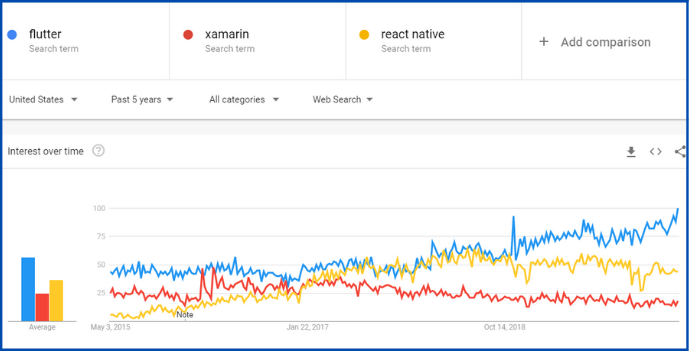
All the aforementioned three frameworks come with their fixed set of pros and cons. They have delivered some exceptional apps, as can be seen from popular apps developed using the individual frameworks. While from a cost-effectiveness perspective, React Native and Flutter are good, Xamarin excels in terms of seamless user experience.
Whereas businesses should shortlist the platforms from the viewpoint of total ROI and consumer experience, developers can concentrate mostly on ease of coding and building high-end applications in a shorter time frame. Let's then come to the conclusion, which of these three frameworks is best for mobile app development across platforms?
The winner is... Regardless of the few cons Flutter has, it's really quite a powerful platform that allows you to create beautiful native apps to ensure a high-end output.
It clearly demonstrates how increased interest in Flutter has left behind Xamarin and React Native as a preferred cross-platform mobile device development system. While Flutter emerges as an excellent framework among the three, depending on your specific business needs you can choose the framework. Alternatively, you can also be guided by an existing cross-platform application development company.
You should speak with the organization about your project scope & budget to get a recommendation on the best system to choose from. If you want the best timely delivered product you can choose to recruit Flutter developers, Xamarin developers, or EPixelSoft ' React to Native developers. We are a credible cross-platform application development company and that's not boasting! Our customer retention rate of 99 percent is proof of our great performance.


 25 May
2020
25 May
2020 5
min read
5
min read