
Explore the latest trends and find our updates on all you need to know about what is happening in the world of web and technology.

 5826
5826
Starting a new business can be exciting, but it also comes with a lot of challenges. One of the biggest challenges is how to bring your idea to market and make it a success. That's where developing a Minimum Viable Product (MVP) can help. An MVP is a product with just enough features to satisfy early adopters and gather valuable feedback that you can use to improve and grow your product.
In this blog post, we'll explore the best practices and considerations for building a successful MVP.
An MVP is a product that has just enough features to attract early adopters and gather valuable feedback. This type of development approach allows startups and entrepreneurs to validate their product idea and make improvements based on user feedback, before investing time and resources into a full-fledged product.
MVP development is crucial for startups and entrepreneurs because it allows you to test your product idea before committing significant resources to it. By launching an MVP, you can validate your product and gather valuable feedback from early adopters, which can help you make data-driven decisions about how to grow and improve your product.
In this blog post, we'll explore the best practices and considerations for building a successful MVP, including defining your MVP, designing and developing your MVP, testing and validating your MVP, and launching your MVP.
The first step in building an MVP is to identify your target market. This involves understanding who your potential customers are, what their needs and pain points are, and how your product can solve their problems. By understanding your target market, you can create an MVP that is tailored to their needs and that has the best chance of being successful.
Once you have identified your target market, you need to understand their needs and pain points. This involves conducting market research, talking to potential customers, and observing their behavior. This information can help you identify the key features and functionalities that your MVP should include.
Based on the needs and pain points of your target market, you should then identify the key features and functionalities that your MVP should include. These features should be essential to your target market and should solve the problems they face. You should also prioritize the features based on their importance to your target market.
With your target market and key features and functionalities in mind, you can then define the minimum viable product. This involves prioritizing the features and functionalities that are essential to your target market and that will help you validate your product idea.
When designing and developing your MVP, it's important to choose the right technology. This means selecting technology that is scalable, reliable, and that fits your budget. You should also consider whether the technology will allow you to quickly iterate and refine your MVP based on user feedback.
In addition to choosing the right technology, you should also plan the user experience. This involves designing an MVP that is easy to use, intuitive, and that provides value to your target market. You should also consider the feedback you received during the MVP definition phase and make adjustments to the user experience accordingly.
After designing and developing your MVP, it's important to iterate and refine it. This involves making improvements based on user feedback and continuously testing and validating your MVP. It's crucial to stay flexible and open to change as you develop your MVP, as this will help you create a product that truly meets the needs of your target market. By continuously iterating and refining your MVP, you can create a product that provides real value to your customers and that has a better chance of success.
In addition to iterating and refining your MVP, it's also important to ensure that it is scalable. Scalability refers to the ability of your MVP to grow and accommodate increased demand as your business grows. When developing your MVP, you should consider how it can be scaled and how it can accommodate increased usage and demand. This will help you create an MVP that has the potential for long-term success and that can be easily expanded and improved as your business grows.
User feedback is essential to the success of your MVP. It provides valuable insight into what your target market likes and dislikes about your MVP, what improvements they would like to see, and what new features they would like to see added. By gathering user feedback, you can validate your product idea and make data-driven decisions about how to improve and grow your MVP.
To gather user feedback, you need to test your MVP with real users. This involves getting your MVP into the hands of your target market and getting their feedback. You can test your MVP with a small group of early adopters, or you can launch a public beta test to gather feedback from a larger group of users. Regardless of how you test your MVP, it's important to get it into the hands of your target market and to gather their feedback.
Once you have gathered user feedback, it's important to evaluate it and make improvements based on the feedback. This involves reviewing the feedback, analyzing the data, and making data-driven decisions about how to improve your MVP. Based on the feedback, you may need to add new features, remove features that are not used, or make changes to the user experience. By continuously gathering user feedback and making improvements based on the feedback, you can ensure that your MVP is always evolving and improving, and that it meets the needs of your target market.
Before launching your MVP, it's important to prepare for launch. This involves ensuring that your MVP is ready for public use, that it has been thoroughly tested, and that you have a plan for how you will market and promote your MVP. Preparing for launch also involves considering how you will measure success, how you will handle customer support, and how you will handle any issues that may arise.
Once you have prepared for launch, it's time to market your MVP. Marketing your MVP involves promoting it to your target market, getting it in front of potential customers, and generating interest and buzz. You can market your MVP through social media, through online advertising, through content marketing, or through any other marketing channels that are appropriate for your target market.
Measuring success and making data-driven decisions are crucial for the continued growth and success of your MVP. This involves tracking key metrics such as user engagement, user satisfaction, and conversion rates, and using this data to make informed decisions about how to grow and improve your MVP. It's important to establish clear goals and metrics for success before launching your MVP, so that you have a clear understanding of what success looks like and can measure progress over time. By measuring success and making data-driven decisions, you can ensure that your MVP is always evolving and improving, and that it continues to meet the needs of your target market.
In conclusion, the development of a minimum viable product (MVP) is a critical step for startups and entrepreneurs. When developing an MVP, it's important to focus on creating a product that provides real value to your target market, to iterate and refine your MVP based on user feedback, to ensure that your MVP is scalable, to test and validate your MVP with real users, to launch your MVP with a well-planned marketing strategy, and to measure success and make data-driven decisions. By following these best practices and considerations, you can increase the chances of success for your MVP and your startup.
MVP development is important for startups and entrepreneurs because it allows them to validate their product idea, to gather feedback from real users, and to make informed decisions about how to grow and improve their product. By developing an MVP, startups and entrepreneurs can minimize risk, save time and resources, and increase the chances of success for their business.
Finally, we encourage you to launch your MVP and start building your business. Don't be afraid to take risks and to iterate and refine your MVP based on user feedback. Remember that an MVP is a starting point, and that it will evolve and grow as your business grows. By launching your MVP and starting to build your business, you can begin to validate your product idea, gather feedback from real users, and start the journey to building a successful business.

 3302
3302
Created by programmer Rasmus Lerdorf in 1994, PHP (Hypertext Preprocessor), as a scripting language, has been one of the most sought-after programming languages for developing dynamic and interactive websites.
However, even though the language has been instrumental in rendering various programming tasks outside the web context, including robotic drone control and graphical application, there has been a buzz gaining the ground that PHP is on its way to meeting an impending doom.
One of the reasons fanning such speculations points out that PHP is a language of hobbyists, or it is just an enterprise language, or it is no longer as effective as it used to be.
Well, before we assume anything about PHP, let's discuss some of the most critical points of this programming language. This way, we will accentuate its relevance to being a key programming language used in the web development process, in addition to explaining why PHP is not going to disappear any time soon, as speculated by some critics.
One may argue that PHP is not all-pervasive language in application development or developing those types of apps that involve using Java or .NET. The main point here is acknowledging the fact that every programming language or tool has its own strengths and weaknesses. Therefore, when there is a need to use a compiled language like JAVA, the application of PHP does not make any sense.
PHP as a programming language is a right tool that excels in web application development, say it powers about 80% of the websites today on the web world. Moreover, even if some may argue that PHP is not an enterprise language, the importance of this programming language even for enterprise is undeniable.
The negative opinion about PHP is peddled because of the dubiety of the critics which contrasts to the reality that PHP programming language is utilized by most of the enterprises for their websites, blogs, or internal tools. With that said, PHP holds its relevance, in terms of being an enterprise language. Even the partial application of PHP for enterprise applications lends gravity of importance to the programming language as a growth catalyst for many companies.
PHP is considered one of the most effective programming languages for developing web apps easier and faster, given it is not a compiled language, and is programmatically designed to scale. This trait of PHP enables companies to launch their apps faster, introduce new features to them, and experience growth of considerable scale. Websites like Yahoo, Facebook, Tumblr, Digg, Mailchimp, and Wikipedia are some of the prominent web platforms that started off with PHP and grew to scale with the programming language.
Reportedly, PHP powers nearly 52% of the top 10,000 websites on the Internet today.
PHP is packed with so many attributes, including, it is versatile, easy to learn, fast and secure, and is a free open source scripting language used on Mac OS, Windows, Linux and supports web browsers, major web servers, and can be deployed on various systems and platforms, cost-effectively.
These are the attributes of PHP language which qualify it to become one of the most indispensable programming languages for developers around the world. And boy, this begs a question, like - how such an important programming language with so many unique features are said to fade away, just like that?
It goes without saying that due to lack of a credible yardstick to measure how a particular programming language should be ranked, it is difficult to come up with an idea about vindicating the ranking of PHP. However, PHP has evolved over the years and many brands have ranked the programming language in its database based on its usages. Here are some examples -
In 2014, GitHub ranked PHP the 3rd most popular programming language after JavaScript, and Java.

Tiobe index is another index for ranking software popularity, and according to its October 2021 analysis, PHP ranked 9th position outdistanced by SQL and JavaScript. Moreover, according to Builtwith, the application of PHP in various websites was impressive since 2017 to 2021, awarding it as the most popular on the Entire Internet in Framework category.
W3Techs' data reveals that PHP is not likely to fade away any time soon, considering out of every 10 websites on the Internet are using PHP in some way. Although the number of PHP usage is declining, it doesn't believe the fact that the number of websites using PHP is higher. For example, WordPress which is the most popular content management system on the Internet relies on PHP. And given how WordPress accounts for powering 34% of the websites on the digital sphere, it cumulates a huge number of websites using PHP right there.
We know that in today's fast-changing technologies nothing stays for good, considering there is always a new technology replacing its outdated counterpart. With the emergence of JavaScript and other advanced programming languages, PHP may seem to fight for its existential crisis of staying relevant, yet the widespread usages of the programming language, and its good rankings by some great websites including GitHub leave us in no doubt as to believing that PHP is not going to die any time soon.
Most of the speculations about the impending death of PHP come from those critics who believe that PHP is a procedural programming language without Object Oriented Programming abilities. Later, these attributes were added to PHP-4, and with PHP7 & 8, the object oriented programming became a staple of the PHP.
Once again, PHP is an effective programming language for many businesses large and small. It gives power to more than 50% of the top 10k websites on the Internet. With such widespread application, including WordPress, we can say for sure that the fate of PHP language is not going to be sealed for years to come.
1.png) 2158
2158
We are in the middle of a crisis, which is completely unpredictable. This began as a health crisis and became a significant economic problem within days and is now on a fast road to being a substantial fiscal challenge. Although reserve banks and governments respond quickly to stabilize the economy and financial markets, many government interventions have not been fast enough to control coronavirus infections, causing COVID-19 disease. Unfortunately, because of the delay, attempts to stabilize the economy would be incredibly costly.
Although several industries have come to a halt to combat the spread of the virus, we realized that our focus is demanding more than ever before. We witnessed increased demand for our services amid the pandemic, with a surge of digitization and mobilization affecting all company sizes.
And, being a leading mobile app development business, holding our client's trust by providing them with uninterrupted services even in these challenging times is also of utmost importance to us. But at the same time, we do need to take care of our staff. Our team is our cornerstone, after all, which makes us stand together no matter what. Here is what we do to produce great results.
While we all work from the comfort of our homes, our moral ideals do not allow us to neglect the sacrifices of frontline individuals who play with their lives to help the poor. Yes, we are addressing all of the HealthCare Workers around the World. Their assistance and dedication is nothing short of what a soldier is doing for his country at the time of the battle.

We thank all healthcare organizations worldwide for fighting this battle and helping us combat this deadly virus spread. As a token of gratitude, we offer special discounts for such agencies on all of our services that directly assist the Coronavirus relief efforts.
The right improvements to the business model are the secret to success in these hard times. Only if you redefine your conventional business model to fit the situation's demands will your company stay afloat. Even before things were what they are now, we knew it at EPixelSoft.
So we started reviewing our business continuity strategy by asking the team members of the respective department's various questions to find the right solutions. The situation at hand compelled us to think about new ways of changing and delivering on our work commitments. Our team of dedicated developers is currently working relentlessly to fulfill the needs of our global partners. Thankfully our remote business model enabled us to ensure zero COVID-19 cases within our team. All of our staff are safe and sound.
As we all know, since the start of the pandemic, the number of confirmed cases of COVID-19 has greatly grown with every passing day, and the conditions are becoming worse. Many brick-and-mortar shops are coming to a close, many businesses are out of business, and people are becoming unemployed.
And a high percentage is our loyal clients. Most of them have developed their company by depending on us for years as regards to technical support. So, we must help them with all that we have in these uncertain times. To do the same, we provide our customers with free testing and maintenance services, which are now part of the EPixelSoft family.
We don't charge even a single penny as a fee to test and keep their apps and website. We hope this step helps somebody in these dreary days to keep running his / her business.
Touchless deliveries are increasing by 40% these days because of COVID-19. Does that mean touchless deliveries are the latest developments in this problematic situation that will comfort consumers? We were thinking about it and found a YES in the answer. Leaving orders on doorsteps or putting a photo of where you need your order dropped off - these are new methods for consumers to get their orders as the Coronavirus spreads out.
As a result, we have incorporated touchless delivery functionality into every app we have been building since March. In these difficult times, we are also adding this module to apps developed by us for free to help businesses stand firm. This is just our little attempt to help the organization flatten the COVID-19 curve.
According to a CNN Business article, several employees of New York's grocery stores have died from the Coronavirus, despite having masks, capacity limitations, and temperature controls to protect them. As a result, many grocery stores go out of business or simply change to the distribution model. The demand for food delivery apps in the US, UK, and Canada is also showing a sharp rise for March and April.

The local grocery companies that have been running offline now are planning to move online by developing grocery delivery apps. To support them in this sudden wave of mobilization, we are offering a flat 40 percent discount on the creation of our grocery delivery apps.
To ensure that our clients will not face any problems in the worst-case scenario, we have allocated enough project managers for each project so that at least one of them is available at all times and conditions. A manager is always in the loop along with PMs and our consumers do not feel uncomfortable and uncertain about their projects and offers.
We provide white-label and personalized solutions for this, which are widely used and recommended by companies worldwide. These products can support startups and small businesses in seamlessly running their operations amid the current crisis. Their solutions provide a full tech-suite for companies so they can do everything they want at one location. All solutions are ready to use and can be personalized within 5 days to reach the market ASAP, as per company branding.
As the World try to contain the spread of Covid-19, many businesses respond to this outbreak by asking as many staff as possible to work from home. At EPixelSoft, we have put in place some of the measures to help individuals work remotely. We are going to look into the following Respect and discounts for health organizations around the World.
The impact of COVID-19 has created hit us significantly. Economies are failing, unemployment is growing, and companies are out of business because of the emerging vulnerabilities. To companies, the only path to success is changing and improving to maintain sustainability at this point. So, this is what we at EPixelSoft are doing.
 3332
3332
A native app is an app that is installed directly on the device for a particular mobile device. Users typically purchase these apps on Google Play through an online store. Native Apps are entirely in compliance with the terms of the roles and output that are implemented. Such applications can be used offline allowing easy access. Although you need a more significant investment in the beginning, native apps keep us sorted by providing a better user experience for a longer-term and are a staple across industries.
Progressive Web Apps are a combination of standard web sites and mobile apps that use modern Internet technologies to provide users with a similar experience to a native application. Built with modern JavaScript frameworks, they are web sites built to function like a native app. They can be attached with an icon to a home screen of a mobile device. Like apps, they offer a full-screen experience when using it.

When we think about all forms about the audience in terms of accessibility and ownership, then native applications offer more acceptable results than PWA.
When we think about all forms about the audience in terms of accessibility and ownership, then native applications offer more acceptable results than PWA.
If we look at in terms of accessibility and ownership by all types of the audience, then the native app gives more satisfactory results than PWA.

The discussion between Progressive Web Applications vs Native apps will always remain relevant. There are use cases for both, and from the technology, it depends on what you want, and need. The differences between PWA and Native apps are highlighted above, and the user will be able to learn how;
That said, a native app allows you to offer users a fully customized and always-on experience. It is the only option that provides a whole new channel to site owners with push notifications, available on both iOS and Android. It is especially good for news publishers, blog sites, and e-commerce companies that want to offer timely alerts and native features to clients and followers.
For a native app, of course, you'll have to weigh the price, the time to launch, and the option between iOS and Android stores if you want to create a native app.
Because native apps cost more to create and involve a more time-consuming development process, we suggest choosing a native app for your e-commerce website to ensure the comfort and satisfaction of your customers.
Native apps deliver a more customized experience, better efficiency, and excellent user support. With all these advantages, your online store can easily meet increasing and competitive demands that lead to higher conversion rates.
 8080
8080
Project management software is of paramount importance in today's organizational framework. It helps project managers execute their tasks effectively while keeping time and money adequately in order. With the business paradigm continually changing, many businesses are now using the software for project management.
A management that is both conscious and constructive will turn into an upsurge of growth that will carry the company to new heights. These software tools also help managers conduct administrative services, ensuring that all employees do so. Let us look at some of the top project management software tools for 2020.
Jira is a multi-platform bug, and software for tracking issues. It comes with features that are effective in project management. First, the program helps you to delegate tasks among your team and prepare for various problems. This also helps you to repair bugs and track the progress with interactive charts.
It is a project management program used by agile teams and is one of finances online's highest-rated applications. The user can use a workflow or build your own as you wish.
Integrate your workflow with other developer tools, such as Confluence, Bitbucket, which you might already use. Using real-time alerts, you can prepare, monitor, upload, and report your project. Jira has a decent mobile interface, which is why it is recommended for large and remote teams operating in various geographical areas.
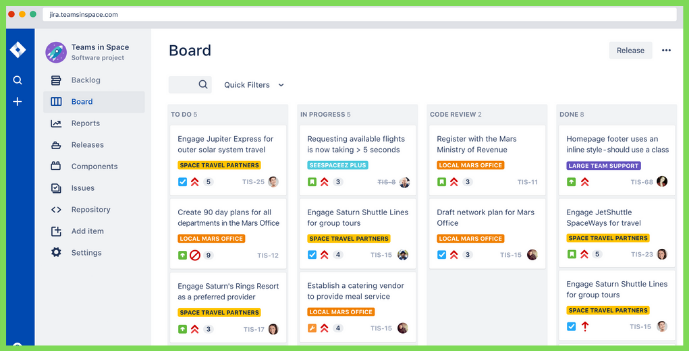
Backlog.com is another online project management platform that allows the user to have full control over the project and track everything relating to business. With this software program, the user can monitor the progress of the project accurately. The user will be able to handle time and schedules effectively, along with Gantt as well as burndown maps. In addition, it also provides features of special task management. It allows multiple tasks to be generated and updated as they are assigned sub-tasks and deadlines.
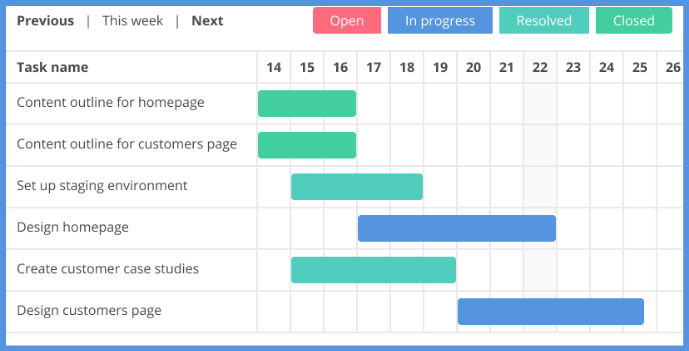
This project management software has a free plan allowing the user to add up to 10 members and providing 100 MB of storage space. Other than that, it has three payable packages: Starter, Standard, and Premium. Pricing starts with the starter package starting at $35 / month.
Asana is one of the greatest free tools for project management, and it is great if you are serious about meeting deadlines. It has top customers, and it is a highly efficient software for project management, running on the cloud. Asana is highly flexible and can adapt easily to your working style. Additionally, it allows you to fix every detail of your business effectively. This also provides a custom dashboard and a search option. In addition, it will allow you to group tasks in columns or sections, or as boards.
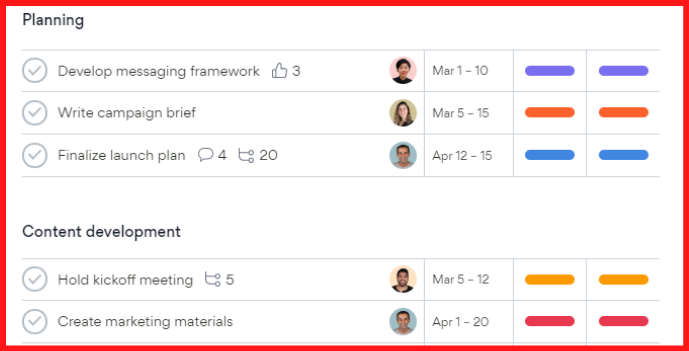
In terms of pricing, Asana has three different plans: Free, Premium, and Enterprise. The free program is suitable for any business that begins using PM software. The Premium package commences at $9.99 / month.
Trello is a basic but user-friendly project management program that relies more on Kanban boards for project management. This includes a special board for any job that any member of the team can easily access. Plus, these boards are adjustable and can be personalized by any member as they need. This also helps you to drag and drop the Dashboard functions. Therefore, managing the tasks, scheduling them, and setting their goals are very simple.
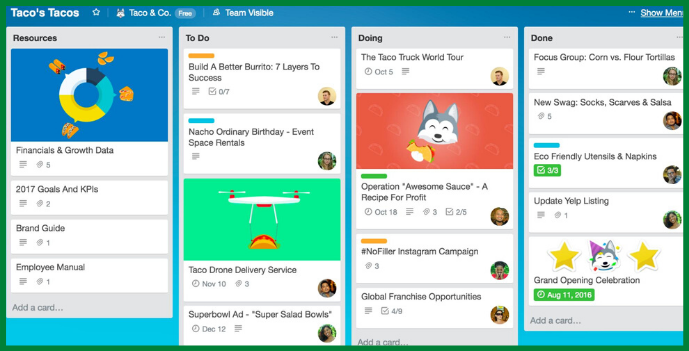
Pricing: Trello has a free plan ideally suited to small businesses and personal use. Business Class and Enterprise plans exist for a medium to large business. The price commences at $9.99 / month.
Clickup is a program that focuses more on increasing efficiency, allowing you to handle jobs, resources, and projects better. It lets you track each member and see what they are doing. It also brings every task and resources into a single place for better use. Ultimately, it is a versatile tool that allows you to work in an approach that suits your project and team. The user will also find some useful workflow tools to automate proc parts.
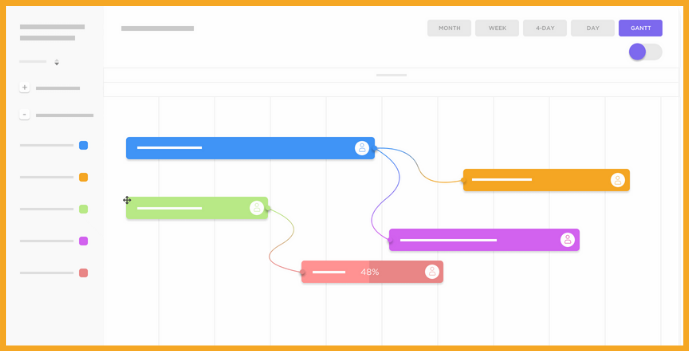
It comes with a 100MB free storage plan and unlimited tasks as well as users. You can also take advantage of a $5 Unlimited plan or $9 Business Plan.
Monday project management is an easy but powerful online program. It helps you to reach deadlines, add accountability to your processes, and control the tasks. The platform makes it easy to monitor what others are working on, track progress, centralize communication channels, and handle documents properly.
Monday.com project management software has eliminated several traditional management framework trimmings and concentrated on simple, visually elegant formats that help to explain the job series.

It includes resource and project management, time monitoring, teamwork, and reporting. For example, you can upload and attach files to cards, comment, mention teammates, and more. It also provides a fantastic platform for project monitoring to gather data from various boards, allowing for better progress tracking capabilities.
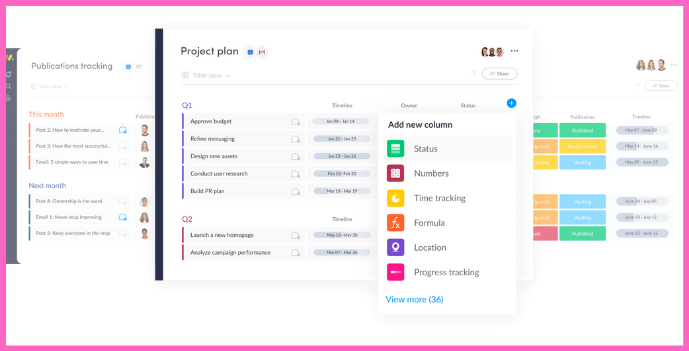
It offers a free trial. General, Four planes exist Regular, Pro, and Enterprise. Pricing with the Basic Plan begins at $39 / month.
The project management software aims to help you run projects efficiently and save money. We have compiled the tools that help you manage tasks more effectively and clarify your goals to move your project forward. Set up your favorite device and begin smashing those targets. These are some of the best software tools to use;
Jira; It is a multi-platform bug and software for tracking issues.
Backlog.com allows the user to have full control over the project and track everything relating to business.
Asana is one of the greatest free tools for project management, and it is great if you are serious about meeting deadlines.
Trello is a basic but user-friendly project management program that relies more on Kanban boards for project management.
Clickup is a program that focuses more on increasing efficiency, allowing you to handle jobs, resources, and projects better.
Monday project management is an easy but powerful online program. It helps you to reach deadlines, add accountability to your processes, and control the tasks.
 8621
8621
There's a lot of excitement about next-gen technology and how it will affect how we do things. Some of these technologies have some validity, especially concerning AI, Blockchain, and Progressive Web Apps. There will be a significant shift from conversational AI to predictive AI as individuals will be finding opportunities for more streamlined workflows and user experiences. Let us get ahead and see software trends that we may not overlook, describing why these next-generation innovations matter and creating a business case around their evolution through data-driven analysis.
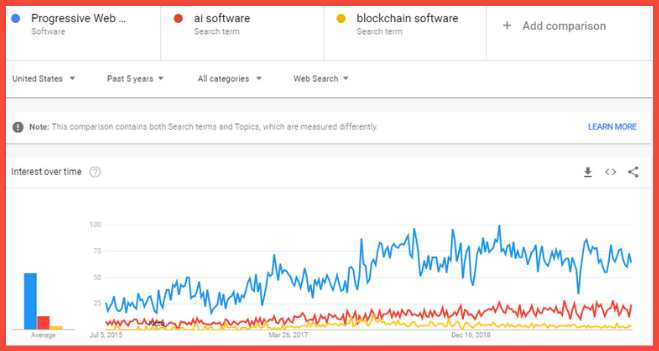
AI software is a software trend that can interpret and respond to natural language patterns by processing a set of inputs. AI software is also equipped to formulate and contextualize outputs. The AI system can learn concepts beyond the concepts we have trained to know. AI is the super-employee, who assumes the burden of continuous learning and personal growth during working hours. By using the same comparison, it will never be possible for this employee to respond with nonverbal communication, create intrapersonal intelligence, or act on visual indications.
So we will witness an AI paradigm change as we head into the New Year. Instead of replacing all customer service agents with chatbots, we will find a way to improve the relationship between the individual workforce and AI tools to create a symbiosis where one relies harmoniously on the other. There will be a great change in emphasis from conversational AI to predictive AI as we see opportunities for more streamlined workflows and user interfaces. Predictive AI transcends vertical, shape-shifting to relieve several pain points that we did not know as pain points until we had the tools to break them down.
The U.S. Army uses AI to forecast broken vehicle systems and provide insight into organizational safety, acting as a technician for automated equipment. This is a continuous conversation between the computer and the AI software in a specific language, which is then repackaged into a language familiar to us by the AI software.
We describe a PWA as an application with the much-loved native app design and computer connectivity with a web application browser-based user interface. Progressive Web Apps cannot do things on their own, neither a regular web app nor a mobile app, creating the perfect formula for accessibility across channels. Users can access the software from any web browser and any operating system. Brands sometimes lack engagement on the mobile app front due to navigation limitations, load-speed, and interrupted user use. Considering that PWAs are a relative of traditional web apps, they are linked to a URL that makes them linkable and share-friendly.

PWAs are practical and efficient and ensure maximum connectivity for users. Users are given two options: continuing to navigate through their browser to the PWA or downloading a shortcut icon to the home screen for greater access. PWAs are a win-win on all fronts, incredibly easy to introduce, easy to use, and easy to upgrade. We are also taking usability a step beyond app compatibility with PWAs because they maintain functionality when connectivity is minimal. It should be the number one priority for brands to outline offline apps. What features will remain accessible even if the user is a victim of a fickle internet connection?
PWAs are an efficient medium for offline brand consumption for countries with no widespread connectivity and represent an opportunity to grow into the new market or revive old markets. While mobile apps need to be downloaded through the app store and follow the app store's guidelines and regulations, PWAs operate independently, restoring creative freedom for branding initiatives.
The introduction of Blockchain coincided with growing interconnectivity and fear of sacrificing data with modern openness. Blockchain is an impermeable, decentralized ledger providing an alternative to centralized processes. Once a transaction's parameters are coded, and a new block is formed, the transaction will self-execute the settings accordingly. All transactions are checked, and the transaction details are anonymized, and privacy is not compromised.
Maybe first, we will look at the obvious use, the banking. When person A transacts with Person B via Visa and Visa does not send details to Person B. Otherwise, Person A is forced to wait for the recovery of the outage and postpone payment. Therefore a small number of actors manage a substantial amount of money and all the stockholders.

In the hands of payment networks, foreign exchanges are the most vulnerable. Foreign transactions usually take 3-5 days to settle and come with a high cost per transaction. Blockchain alternatives like Ripple and Tron boast that the fees are greatly reduced, and transactions confirmed in less than half the time. Bypassing big banks is an enticing first-thought, which is why we saw saturated banking and financial channels at Blockchain.
We can identify severe data security lapses and reverse the paranoia induced by them. We may be able to apply Blockchain to the voting process, cutting machines out with seedy security protocols. What if we are transforming Real Estate into a completely independent process, buying and selling homes without a broker, and checking sales and payments across the Blockchain network? We now know that Blockchain technology is applicable wherever privacy concerns exist, and whenever anonymity is required.
It is sometimes hard to contextualize trends and apply them to your company. The following are some of the Top Software Trends in 2020 that we may not ignore this year. These next-generation technologies are fun to read about, but it is pretty much pointless without implementing the details. So take out of Purgatory your current tech solutions, and create them a bridge to the enlightened side of things.
Blockchain is best at security. If there is a question about privacy or security, it works best.
 5880
5880
We do not doubt the fact that in almost every field, the whole economy is slowly shifting from the conventional market to the digital one. The most influential explanation for this is because of the increased need for comfort and convenience. And web developers did not disregard that need.
That's what Chatbot is a place built for users to have a one-to-one conversation with the bot and find all they are just looking for in a single conversation. A chatbot is a shorter "Chatterbox" type and means just what the name suggests. It is a box you can chat with! It is computer software that enables you to interact with customers through either voice or text commands, or precisely like a human, and answers all your queries.
A chatbot is artificial intelligence (AI), a structure that can and will be used by messenger applications. The Chatbot is a platform which increases your convenience in finding things.
Let us divide this into some parts to understand it better. For example, when you open an application on your phone to get something, you must always proceed in some steps before you can enter the final stage.
Chatbot makes it easier for you, rather than navigating the app from one place to another, and you can open the website chatbot, and then text whatever you want in a simple conversation and Chatbot will get it for you.
At first when you had to find it in some links on Google, you can now get it all in questions and answers form! What you are required to do is ask a question as a user, and the Chatbot will send you a reply.
It is not accessible to a breakthrough in this technology-driven world that we live in, where there is rivalry in every field. The trends are shifting, giving rise to the use of Chatbots; today, there are more than one million applications that users can choose. But the chances are minimal because, on average, a user only installs one or two apps on his phone during one time.

Users today like to download interactive apps on their devices, apps that they do not spend much of their time finding something they want. This is exactly what developers need to understand, users' tastes and desires are evolving, and it is time to make your product exciting if you want your app to stay on top.
As for now, Chatbots have been given space by many big ventures so they can enrich their customers ' experience on the app. Not only do the customers love it, but they prefer the apps that allow them to move from one location to another to find something.
Change is the only thing that is constant in this complex world in which we are living. Users still need something new and exciting, and web development companies ensure their sites are as user-friendly as they can to attract more and more people on their network. If they fail to do so, the users will turn to a very convenient alternative.
In the middle of all this, the reason why web developers with Chatbots should have a market share is because of the advantages Chatbots provides for both consumers and web developers.
Consider this; the bigger the company would be, the higher the number of staff in the business would be for client service. And that would, of course, cost the company a lot since every employee has to be paid. However, having Chatbot is just a one-time investment because it eliminates the need for customer service employees; at one time, Chatbots can handle thousands of customers.
The good thing about Chatbot is that, depending on the app, it functions according to your convenience, you can ask anything, and the bot will offer you the answer immediately.
No user will choose to use an app that is not fun or engaging; Chatbot allows users to chat with the system, and there is always the guarantee that an instant response will be received. The best thing about Chatbot is that it is still open to users. Whatever the time of day it is, there will always be an answer.
Instead of navigating on an app from one page to another to find something, Chatbot can help users access it all in one go. All you need to do is to text your needs, and the Chatbot will see it immediately!
Several advantages come with Chatbots, including their user-friendly existence for customers to their developer-friendliness. What the web developers and users strive to is faster and better communication in every field.

People do not have the time to spend their resources in using any device, and Chatbot makes it simpler for them, saving them time and effort.
And finally, with Chatbots increasingly being used and approved, it is safe to assume that it is not far when Chatbots can conquer the entire web-based app industry.
 2163
2163
The evolution of technology, storage, and processing power has contributed to the embodiment of cloud computing and its growing popularity for critical business support functions. A more advanced, cloud-based technology is now replacing the long and costly cycle of purchasing servers, Software, licenses, and equipment.
Pivoting into the cloud can be a considerable challenge. That is why the platform you select is going to be a significant choice that could potentially impact company goals in the short and long term. Below we compare the two major players on the market, Oracle Cloud VS Amazon Web Services ( AWS), to find a solution for the needs of your database management system.
Oracle Cloud is a cloud computing framework that incorporates the applications Infrastructure as a Service (IaaS), Software as a Service ( SaaS), Application as a Service ( PaaS), and Data as a Service (DaaS) within Oracle's cloud infrastructure. Oracle Cloud provides seamless workloads for enterprise users and developers that meet server, storage, device, and network needs. The four Oracle Cloud services are;
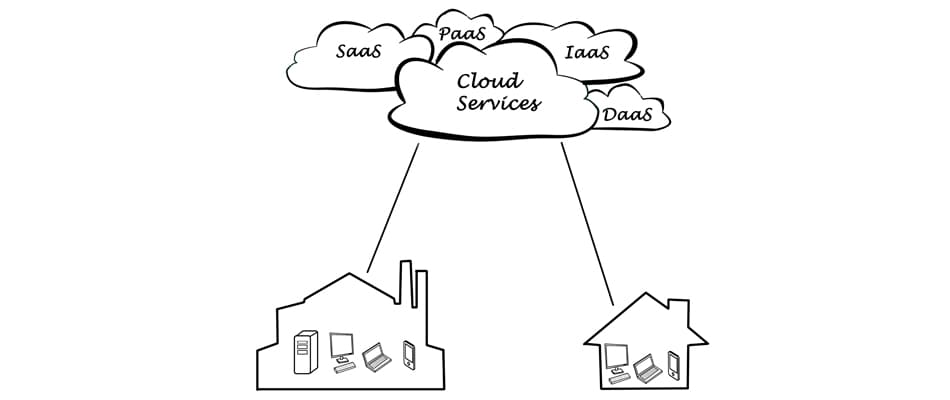
Oracle Cloud Platform (PaaS)
The Oracle Cloud Platform enables users to develop, deploy, incorporate, and expand cloud-based applications. Oracle leverages artificial intelligence with mastering the machine to offer automated solutions to organizations.
Integration: This service provides adapters that support databases on-premise and cloud.
Information Management: It is a data management framework consisting of transaction processing, data storage, and no SQL database autonomous solutions. It is the first on the market to have an independent database.
Protection: The Oracle Cloud Platform provides end-to-end protection by controlling the specifications of a hybrid cloud setting, IT governance, and compliance.
Application Development: It is a free, standard-based, and standardized application development framework built for large-scale enterprises wishing to create and operate first cloud applications for mobile and APIs. It facilitates the creation of native, cloud-based, and low code containers.
The IaaS solution from Oracle enables users to develop and run a large number of applications and services in the host environment of Oracle. The programs encompass:

Networking: Oracle offers flexible Virtual Cloud Networks (VCN), routing, IP addresses, and firewalls to enable continuous protection of private networks.
Compute: Oracle offers Virtual Machine instances to clients configured for varying workload rates and business efficiency.
Database: This service provides reliability, data security, and granular controls for Real Application Cluster (RAC) users in one reliable cloud environment.
Storage: Oracle's IaaS provides block length, storage of archives, and storage of items to fit client needs from small websites to larger, more demanding applications for businesses.
This framework utilizes Oracle ID Graph to access external data, offering consumers a cross-channel market understanding that intended for advertisers and companies who want to understand customers deeply.
SaaS solution used by Oracle is known as Oracle Cloud Applications. These cloud-based systems deliver distinct, industry-specific products and services for uniform features, with different implementation choices. From artificial intelligence to the Internet of Things Apps, the industry offers everything.

Amazon Web Services (AWS) is a cloud service provider that provides solutions such as Network as Service ( IaaS) and Application as Service ( PaaS). Amazon's offering cloud service offers server, storage, networking, email, remote computing, and security solutions for customers. Below we define the most widely used AWS services, which are divided into four categories:
Amazon DynamoDB: This is a completely managed AWS-based NoSQL database service offering high scalability and versatility, ideal for Smartphone, gaming, and ad tech solutions.
Amazon RDS: Amazon's Relational Database Service (RDS) is a related and accessible Web service for MySQL and Oracle Server. This supports users in managing and configuring cloud relational databases.
Amazon ElastiCache: This service is completely controlled in-memory cache and data storage service suitable for high-performance cases close to DynamoDB ones.
Amazon S3: Easy Storage Services (S3) offers infinite storage space through the cloud service interface. It is the cloud storage that is most supported since other AWS resources addressed here will read and write from S3.
Amazon Glacier: This method is used for archiving in the long term. This ensures that backup products in deep storage are safe and stable, even though they are rarely used.

Amazon EBS: The Elastic Block Store (EBS) of Amazon provides volumes of block storage for the EC2 instances. It is preferred to store permanent data and can vary from 1 GB to 1 TB in storage capacity.
Amazon EC2: The Elastic Storage Cloud (EC2) from Amazon provides customers with a resizable computing ability so that customers can launch as many private virtual servers as they need while retaining the security and networking features.
Amazon CloudFormation: Helps users to customize many on-the-go AWS services with common language capabilities.
Amazon Elastic Beanstalk: Helps deploy and manage web applications, benefiting from maximum capacity distribution, load balancing, and more.
AWS IAM: Enables user identity management capabilities and user access control of IT administration on different AWS tools.
Main Differences: AWS VS Oracle Cloud
Ensuring that the best cloud storage provider meets the database needs is a critical business decision. Considering that Oracle Cloud and Amazon Web Services (AWS) are one of the two largest players on the market right now, the key differences between each platform have been narrowed down, and detailed below:
Oracle Cloud came onto the market in 2015. Oracle had a very robust set of product offerings, such as Oracle Enterprise Performance Management, Oracle Enterprise Resource Planning, and more. The firm has established its expert presence in the software and software licensing solutions field.
Amazon has established and hosts some of the largest and most notable public clouds, such as the cloud database of SAP Hana, Netflix, and Instagram. They have built a wide presence in the market where their expertise serves as a significant competitive advantage.
Oracle currently offers a price cut for long-term customers who already pay a discount for licenses to applications like Middleware and database if they choose to run their software in the cloud.
Amazon Web Services (AWS) provides a pay-as-you-go fee model that gives customers flexibility over how many services they need to add to expand. Users can save money when they book for services such as Amazon EC2 and RDS. Investing in reserved capacity is equal to capacity on demand, meaning the higher the initial cost, the higher the discount.
Oracle Cloud also provides a pay-as-you-go model where, according to their website, the laaS and PaaS services are calculated hourly and paid only for the resource consumed.
Because of the vast options that Oracle Cloud and AWS provide for their cloud solutions, they rely on a wide network and a range of partners to support it. Users are able to get customized solutions and support services based on the particular industry and organizational needs through their partner community.
The AWS Partner Network (APN) offers technological, marketing, and go-to-market support for AWS-based businesses. They provide the resources and support for the partners to advance specific business needs.
The Oracle Partner Network (OPN) is somewhat similar, as it offers the actionable opportunity to migrate to cloud-based services for companies.
The AWS payment model makes quick adaptation as business requirements change and fluctuate. Organizations will be able to pay for services as required. Users can also leverage flexibility when it comes to Oracle Cloud depending on how often they will need to rely on services.
Defining which platform would better fit business needs is critical among the two competitors. Whether it's business-sized enterprises or small companies, data and cloud infrastructure needs are increasing rapidly.


 15 Dec
2022
15 Dec
2022 5
min read
5
min read