
Explore the latest trends and find our updates on all you need to know about what is happening in the world of web and technology.

 2666
2666
While security personnel is becoming constantly being used to plan for enforcement reviews and handle security incidents, B2B businesses is a business that has started inquiries for the outsourcing of managed security services.
A recent report by analyst firm IDC found that Canadian companies will become more focused on SaaS third-party and controlled security services. According to IDC, 61 percent of security professionals also note that the main reason for outsourcing is to ensure 24-hour staffing, while 39 percent say that security is not the core of their business.
To CISOs, the most important shift is that they are now working on the presumption of being hacked. As a result, we see them increasingly turning to advanced behavioral analysis tools that detect unidentified anomalous events, such as servers interacting with each other that have never previously interacted or data exchanges with external sites that have never before existed.
Cyber threats know no boundaries Regardless of nationality, CISOs are all facing new groups of digital and cyber threats from professional hacker teams and illegal marketers. Cybercrime, experts say that this has become an organized crime.
The threat environment is evolving so fast that it is almost impossible for security teams to keep up. "This is where the offerings of managed security services are essential. Managed security service providers can invest in acquiring the necessary expertise, technology, relationships, and business methodology to meet their customers ' security requirements.
Managed security service providers can invest in gaining the necessary expertise, technology, relationships, and business methodology to meet their customers ' security requirements.
A strong partnership with a managed security service provider adds to the existing security team of a company trained, experienced cyber-threat specialists.
With more standards and protocols than virtually any other industry, selecting the most appropriate framework remains one of the most important security decisions a B2B professional can make. This has to go hand in hand with a B2B company's compliance regimes in its specific vertical.
Choose the security framework- ISO, NIST CSF, PCI DSS- best suited for your organization based on industry, regulatory requirements and contractual agreements. Base your existing controls against the selected framework and develop an improvement plan. Define the testing process for each check
Other experts say B2B professionals need to understand safety standards first. According to Dan Hoban, Business Development Director, Nuspire Networks, an MSSP specializing in network security management, this often means that standards must exist at a level that everyone in the organization can understand.
The most successful standards programs start by writing a report for everyone to understand, not just the IT department. In order to ensure that everyone follows safety standards, creates compliance procedures and training ensure that it becomes a routine, not just a text. It is also important for everyone in the company to adapt to security processes- authentication policies, methods of information sharing, etc.
In addition, a B2B security practitioner must keep documentary evidence and work plans in a centralized location to be referenced as needed.
Choose the right personnel and equipment. Cyber threats continue to spread and expand in the B2B domain. With the advent of new technology such as SDN and drones, it remains a challenge to find the right staff and appropriate resources for minimizing protection.
There is a severe shortage of qualified security staff who are able to understand what resources to use, how to integrate them into a security program, and how companies are looking for the kind of security outcomes.

B2B companies may find it impractical to do their own security in this situation. And they may perceive that the process can be simplified by a single security vendor. Then you need to create a hierarchy of protection.
Prioritize vendors who can contribute several technology pillars; vendors who allow your defense orchestration should be at the top of your list.
The very main reason for managed security service providers (MSSPs) is these kinds of problems. To conduct business, B2B companies went into business- not to provide proof of remedies for computer breaches. According to experts, they need an optional solution when dealing with security issues.
Another the undeniable benefit to companies is the versatility that comes with MSSPs, "says Simon Talbot, analyst, Proactive Risk Management, a company responsible for risk management and security solutions." It is no longer necessary to employ, hire, train or manage resources internally for MSSPs to take care of the functions of security and crisis management. This versatility also means service level and effectiveness are highly achieved.
B2B companies can outsource managed security services as well as the CISO itself. At least that's a solution provider's premise. The problem with many companies is that they have no need or ability to pay for a full-time security professional, so they allow their network administrators or developers to do part-time security.
This becomes problematic because security is niche expertise, and it's not really something that you can pick up from the side, and companies are finding that the hard way. "Hence, the new approach to outsourcing CISO services as needed.
With every newly advertised network hack, it seems to go in spurts. According to MacDougall, this is when B2B management teams realize that there is no one on board to secure their customer data and need to virtualize the role. This allows even the smallest B2B start-up to have protection for a fraction of the costs on the scale of the Fortune 500 company.

 2332
2332
In this modern world of digital renaissance and Internet of Things (IoT) and similar technologies such as Social, Mobile, Analytics, and Cloud (SMAC), Big Data, and Cloud Computing, etc., B2B marketers are exposed to heavy data volumes and are therefore obliged to use encryption to protect data.
Cybersecurity is becoming a top priority for international marketers. It is a mixture of technology, procedures, and policies designed to protect consumers ' networks, devices, systems and sensitive personal data such as their names, addresses, phone numbers, images, and email addresses.
Millions of users around the world are generating huge amounts of data and are more careful than ever about their data security. In addition, international data security regulations such as GDPR and CCPA require marketers to use cybersecurity for data protection or impose heavy fines for breach of regulations. The following are tips on how B2B brands can employ Cybersecurity for data protection.
B2B marketers need to understand cybersecurity threats in order to take advantage of cybersecurity for data protection. We live in an era in which a wide range of digital pieces of equipment, gadgets, and devices surround us. These days, no single B2B company is deprived of computerized or automated control systems.
Marketers, therefore, need to prepare themselves to exploit technology for data protection, which involves providing training for workers to instill cybersecurity culture in them and enabling them to keep up with the latest cybersecurity standards around the globe.
B2B companies need to invest in efficient business intelligence systems that need to be shared at potential cyber threats across multiple departments. It helps to have an extended network with connected devices. Actionable intelligence coupled with brand-exclusive security solutions helps to make data protection the best out of cybersecurity.
B2B workers must build risk intelligence so that they can efficiently manage data protection cybersecurity. In addition, risk information can be quantitative, qualitative or automated.
An ideal tactical threat system can handle all kinds of external threats effectively to leverage data protection cybersecurity. This includes firewalls hazard, malware protection, web gateways, email security and prevention of intrusion. Having an impactful business intelligence infrastructure and proper analytical ability to identify threats on time can help organize the B2B cybersecurity protection.
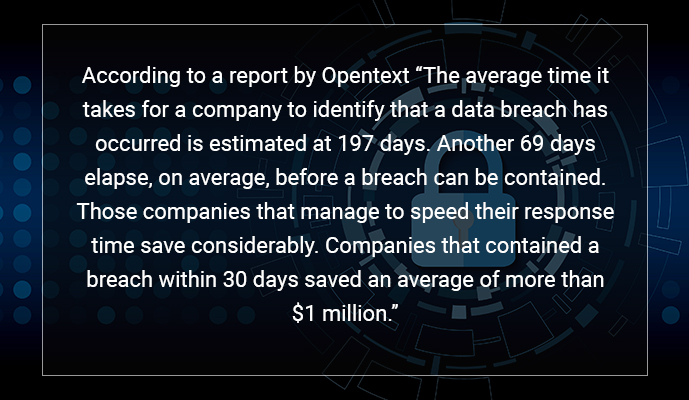
communication from a computer by leveraging cybersecurity for data protection to facilitate faster collaboration and business decision making. Organizations must reduce time in the event of potential data breaches to identify the same and remediation time without being apprehensive.
This risk analysis technique works to exploit cybersecurity for data protection by focusing on small and industry-specific cyber threats. Although correlating data to improve data cybersecurity accuracy can provide accurate information to enhance protection, it is also useful for organizations to understand the importance of data structuring across a range of security techniques

Cybersecurity, also known as cybersecurity and protection of information technology, refers to computer systems being secured from malicious threats of harm or data breach. The security covers the protection of equipment, software, electronic data and protection from unauthorized access to data centers and other computerized systems.

It requires procedural methods by using code, hardware, and procedural methods to protect applications from malicious external hazards. Because modern applications are accessible across a variety of networks, it is important for marketers to deploy cybersecurity to protect applications, particularly software applications.
Software applications are vulnerable to a wide range of threats, including unauthorized access, access manipulation, modification, stealing, or even deleting sensitive user data.
It includes activities to protect internet users in an era of Internet Security. This cybersecurity element is linked to the protection of network data usability, integrity, and security.
This cybersecurity element resonates with risk assessment and management. Having a built-in cybersecurity system that helps B2B marketers secure their data for foolproof application security and risk management enables the business to secure their data securely. For example, cryptography tools protect messages during transmissions and digital signatures by asking individuals to validate their identity.

This cybersecurity component focuses on the IT safety management sensitization of employees. This also involves workers 'skill-development to deal with potential risks. General education on data security should also be given to workers after a while in order to get to know them about IT policies, global data protection regulations such as GDPR and equipment management.
The first step is to develop security policies and define them correctly in order to effectively exploit cybersecurity for data protection. It is important that all workers within a company receive some form of training so that they can learn about the fundamentals of data protection and keep up with the latest global data protection legislation, such as the General Data Protection Regulation.
Better yet, employees also need to be trained on precautionary measures such as avoiding opening suspicious emails and typing URLs directly in search bars. In addition, each system should have a strong password that employees can not share with their peers under any circumstances.
Therefore, serious consideration of leveraging information security for data safety is critical for B2B organizations. Installing firewalls and anti-virus protection, protecting inherent brand phones, providing a data backup system and effective management control to track end-to-end consumer activities are just the bare essentials for optimizing data protection cybersecurity.
Enterprise content management systems can be used by companies dealing with sensitive customer data information to optimize data protection cybersecurity. Specific documents can be represented in ECM code which guarantees that even high-level managers are unable to access the file without the user interface's consensual approval.


 08 Nov
2019
08 Nov
2019 5
min read
5
min read